An electric cargo bike can answer a specific transport need: shopping, equipment or passengers when the model permits them. It does not automatically replace a car for every purpose. Start with what you carry, the route and the storage location, then compare configurations with their individual limits.
Front-loader, tricycle or longtail: compare layouts
The two-wheeled front-loader
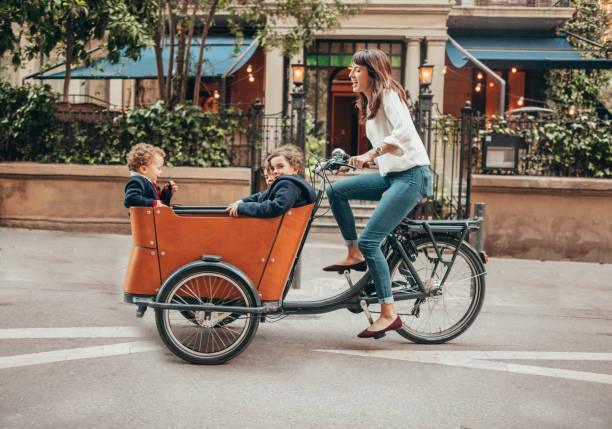
The load sits between the handlebar and front wheel. Examine the box opening, attachment points and space occupied by the objects you actually carry. Check the specific model’s overall length and turning space rather than assuming dimensions from the category name.
The cargo tricycle
It has three wheels, with fixed or tilting designs depending on the model. Support while stationary is different from cornering behaviour. Try low-speed steering and establish the manufacturer’s intended riding technique. Three wheels do not remove the need to assess stability along your route.
The longtail
Its extended rear section takes carrying accessories. Look at pannier space, overall width with foot supports and access for loading. A long rack does not permit any passenger or load: the exact setup and its stated limits still determine what the bicycle can carry.
Check intended uses and actual load limits
List the weight and volume to be transported, including accessories. Distinguish the bicycle’s gross weight limit from the rack or box limit. Tern’s guide illustrates that the total includes bicycle, rider, accessories, passengers and cargo. An advertised total weight is therefore not a payload allowance on its own.
For passengers, identify the expressly intended setup: seating, restraint, foot support and protection from wheels as required by its manual. Check compatibility and local rules. Passenger capacity cannot be inferred from wheel count or the apparent size of a box. Do not improvise a seat from a plain board.
For shopping or equipment, prepare a representative load and check how it is secured. Bags and loose straps must not interfere with wheels, steering or braking. Identify where you will put the items on arrival: the ability to carry a volume is insufficient if there is nowhere practical to unload.
What an electric cargo bike changes
Assistance supports pedalling; it does not cancel the weight when pushing or manoeuvring at a standstill. Test starting and control access in the intended configuration. Do not choose solely by the motor’s power figure: riding position, gearing and ease of operation also matter on everyday journeys.
Arrange charging around an observed loaded journey, with a margin for diversions. No universal range is stated here. Establish how to move or store the bicycle without assistance and check access to a compatible charger. Do not modify a battery to make a bicycle carry a load outside its permitted limits.
Try the bicycle, access routes and parking
Start the trial without passengers and add a suitable test load according to the manufacturer’s instructions. Urban Arrow’s manual notes that loading changes handling and braking. Practise starting, turning, stopping and using the stand in an appropriate place before assessing a regular route.
Measure doors, storage space, narrow passages and the room needed to turn. Check that the lock reaches a usable anchor point. Consider the complete journey: entering a courtyard or leaving a parking area can be more restrictive than the riding distance. The table provides practical checks before deciding.
| Your need | What to check |
|---|---|
| Regular shopping | Bag volume, attachment and unloading |
| Passenger transport | Permitted setup and limits in its manual |
| Narrow access | Equipped width and room to turn |
| Daily parking | Storage, stand and locking point |
Compare with the car without assuming savings
Build a budget covering the bicycle, required accessories, maintenance, any parking costs and provision for battery replacement. Compare it with transport expenses genuinely avoided. If a car is retained and insured, its fixed costs do not disappear because you do some shopping trips by bike.
First identify journeys the cargo bike could replace and those requiring another arrangement. Do not treat an unconfirmed grant or future resale as guaranteed income. Environmental comparisons must also account for manufacturing and use; this article establishes neither a numerical saving nor an absence of impact.
You are ready to choose when you can explain what you carry, which access routes you use, where you park and which expenses you replace. Resolve any significant obstacle before settling on a model. The guides and manuals below help prepare those checks and are not a current sales offer.