Facebook E-Bike Build Contest Results — Archive
06/09/2025
Discount Vouchers for E-Bike Stories — Archive
16/09/2025
Building your own electric bike
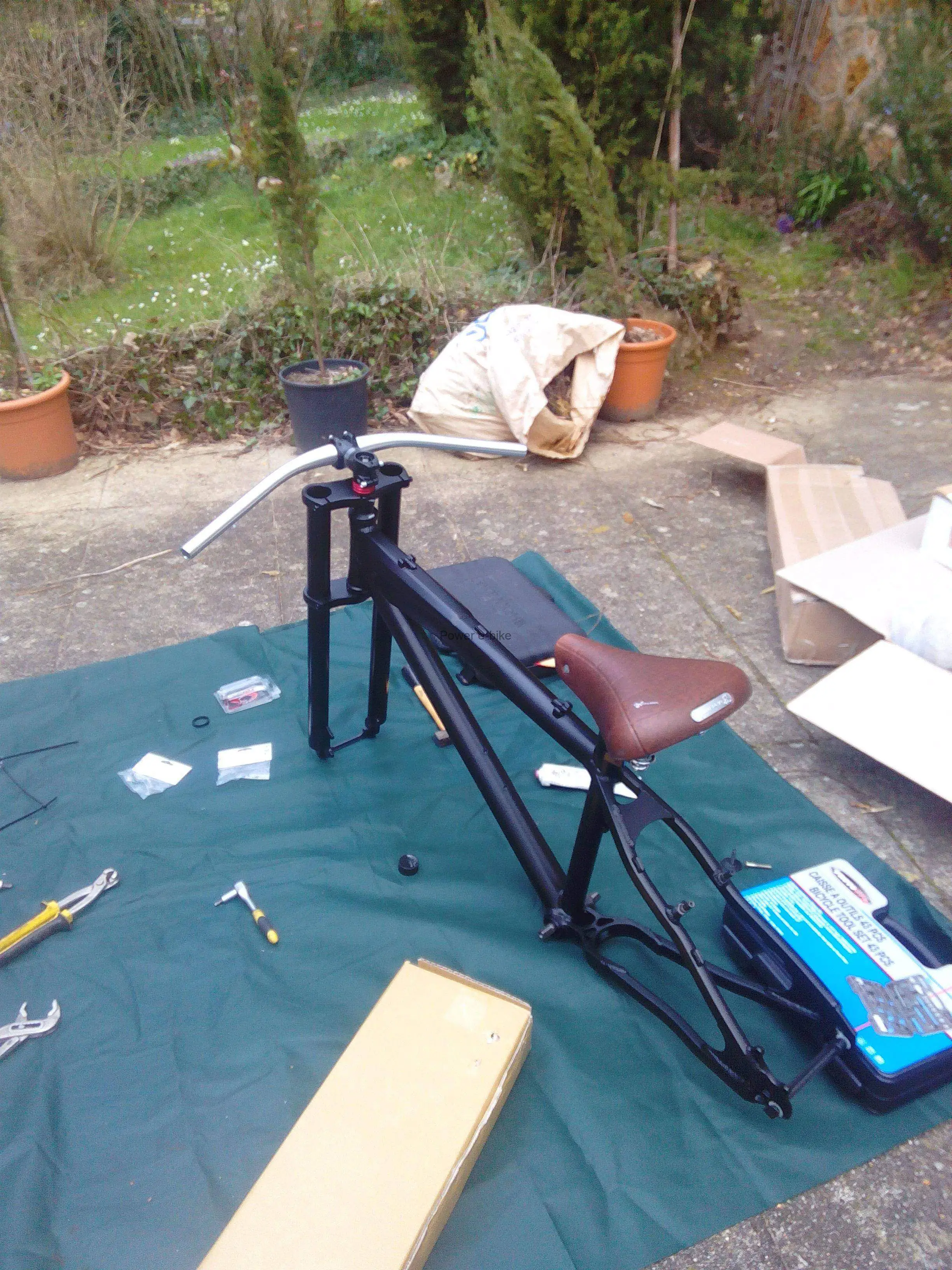
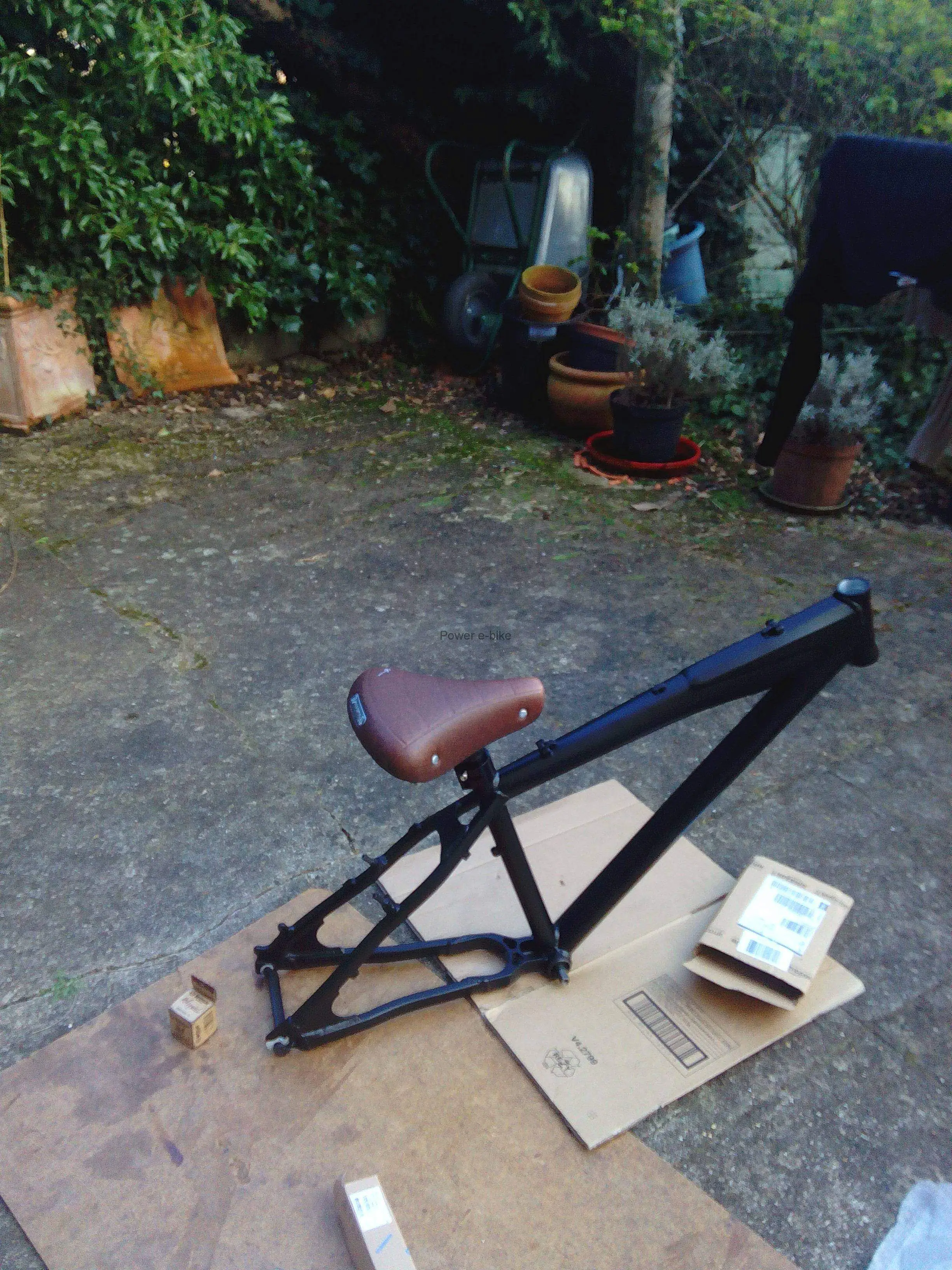
The original article mentioned a YouTube video of the build. The video is no longer embedded here; the construction photographs remain below.
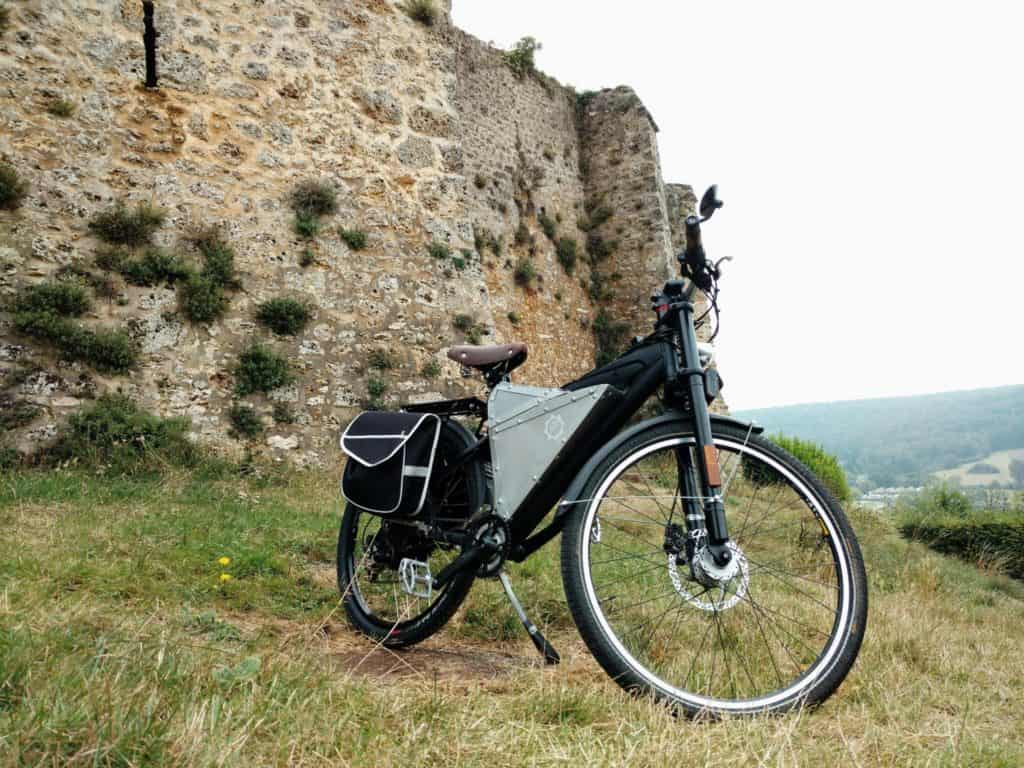
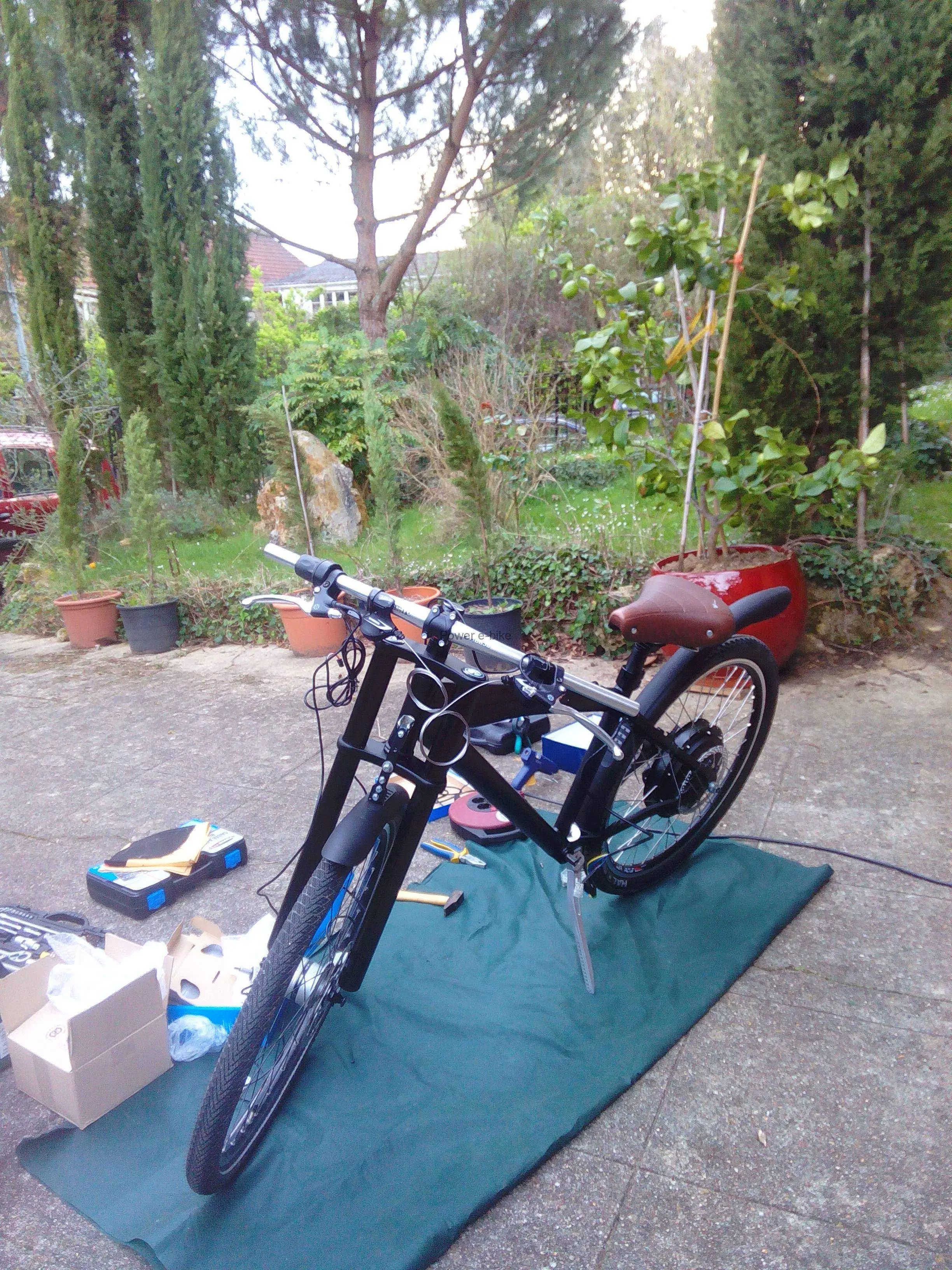
“An electric bike? That’s for lazy people!” That was what I used to tell myself whenever a woman in her eighties overtook me on an unrestricted 2-wheeler! I insisted on getting around using only my legs, and put up with arriving at work in a sweat-soaked T-shirt.
Why ride an electric bike?
Table 1: Advantages and disadvantages of a conventional bicycle
- The original text cited an unreferenced study giving an average cycling speed of 14km/h in town, compared with 12km/h by car. These historical figures are not a guarantee for a particular journey.
Addressing the disadvantages :
- Ultimately, an electric bike combines some of the comfort of a small motorcycle with the benefits of cycling. It can help on mornings when motivation is lacking and reduce the sweat caused by a long climb.
- For exposure to bad weather, a good poncho helps.
Table 2: Advantages and disadvantages of an electric bike
Advantages | Disadvantages |
Transport presented as environmentally friendly in the original comparison | May require too much physical effort |
Agility and speed in town(1) | High exposure to bad weather |
Easy parking | – |
Low maintenance costs:
| – |
Addressing the disadvantages :
- A good poncho still helps with bad weather, even if style suffers a little.
- Purchase price: the original article mentioned electric bikes from 600€ and around 1500€ for a good-quality bike with sufficient battery range, a robust motor and a sturdy chassis. These were historical price indications, not current offers.
There are then 2 ways to obtain this form of transport:
- Pay the amount needed for the 2-wheeler of your dreams
- Convert a conventional bicycle into your dream 2-wheeler. The original article claimed savings of up to 1000€ compared with an equivalent electric bike; this historical comparison must be checked against a current budget.
Building the electric bike of your dreams
At first I planned to convert my old racing bike into a pedal-assist electric bike. After thinking it over and researching online, I judged its old steel frame and rim brakes insufficiently robust for the weight and power of the equipment I had in mind.
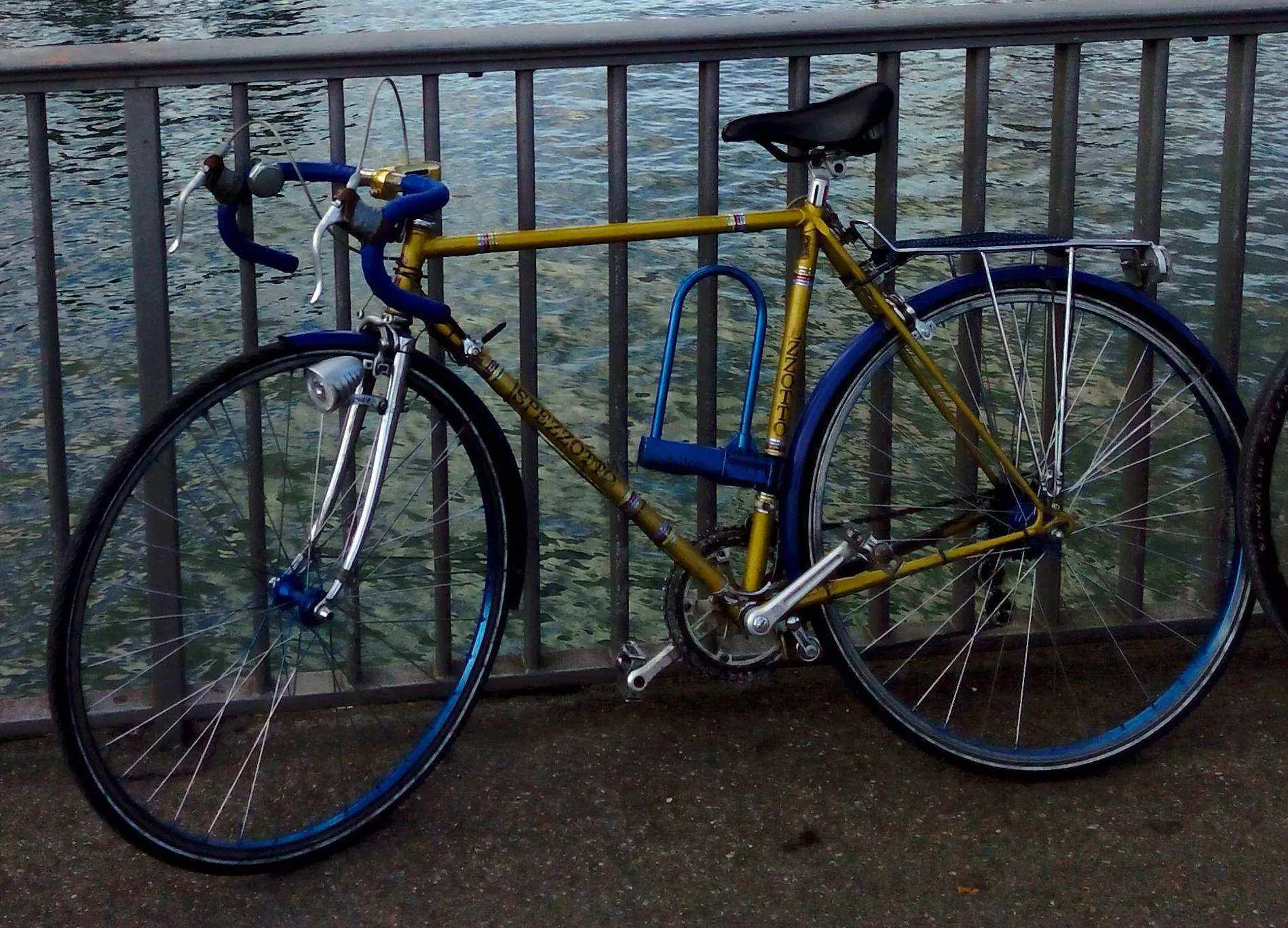
Figure 1: Racing bike judged insufficiently robust for this build
I liked the retro look of Triumph motorcycles, so I set myself the challenge of starting from scratch and building a hybrid between an electric bike and a small motorcycle.
Design requirements
- High power, high speed with enough torque (for good acceleration)
- Strength
- Low weight (it should be possible to carry it over short distances and take it on trains)
- Modularity: The ability to maintain andupgradethe 2-wheeler easily as future budgets allow
Building the mechanical components
Frame
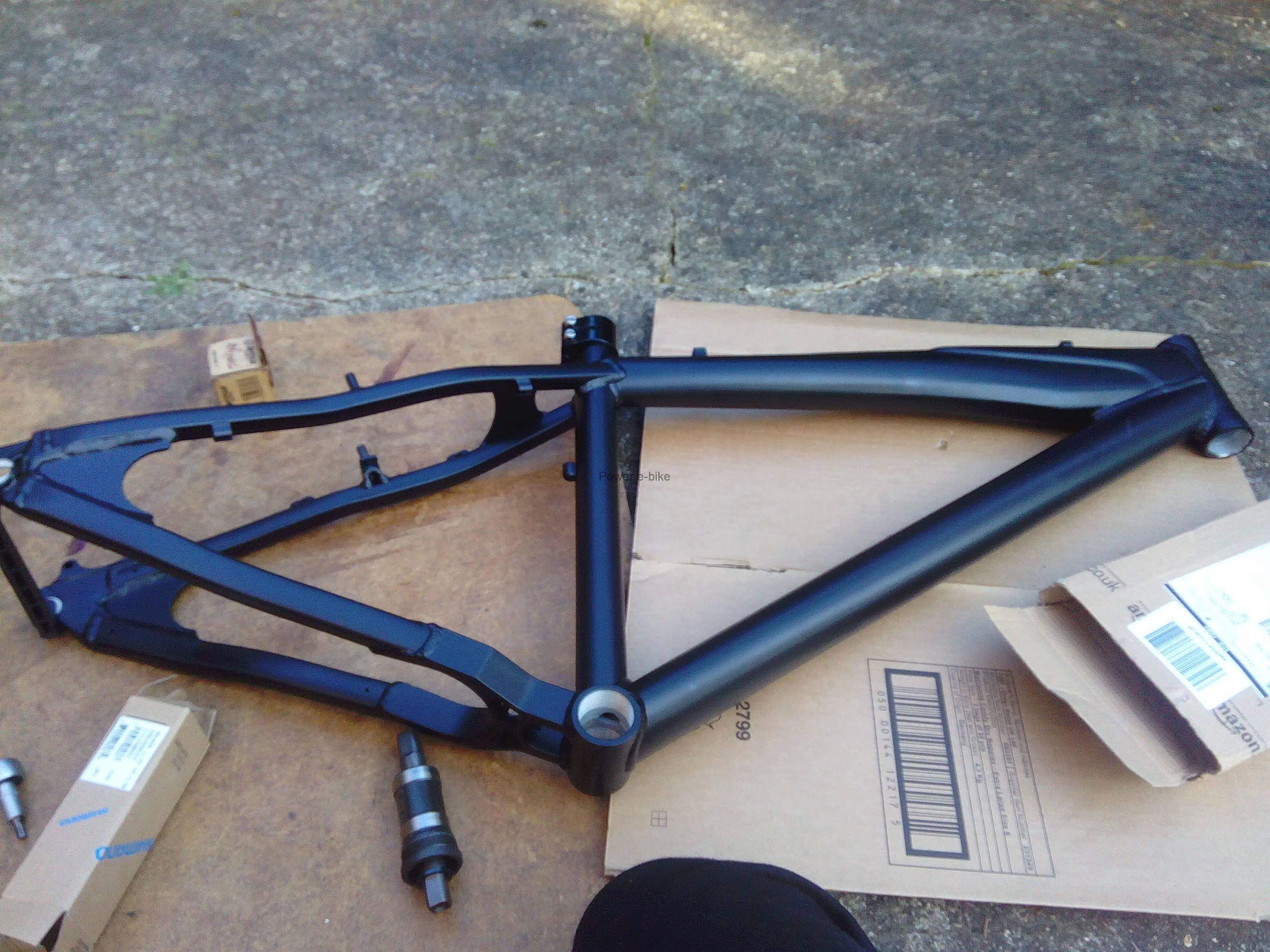
Figure 2: Müsing frame
The chosen frame was a dirt-bike frame imported from Germany. It used reinforced aluminium tubes to provide the strength and low weight needed for the power of this build. Aluminium resists corrosion, but this does not make the complete bicycle immune to rain or remove the need for maintenance.
Fork
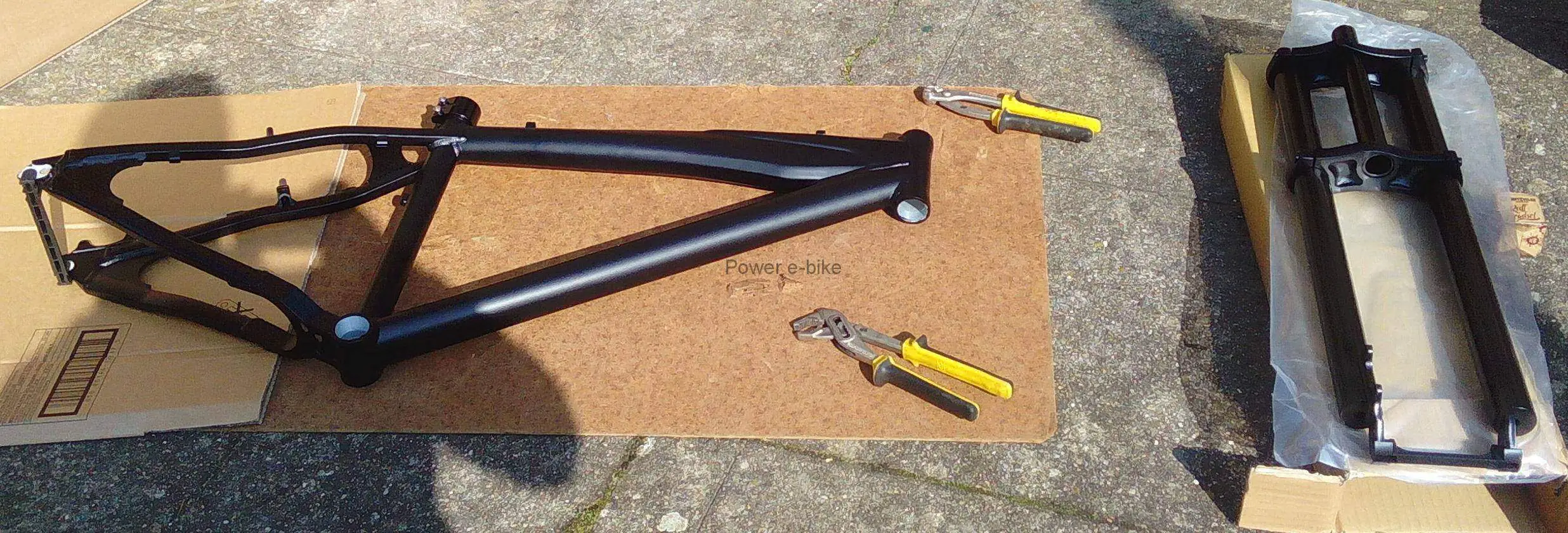
Figure 3: Steel fork from Ruff-Cycles
Good-quality suspension forks were considered expensive, heavy and subject to faster wear, so a rigid fork was chosen. The author chose steel for its behaviour under impacts and the slight reduction in vibration from uneven roads; this choice does not replace checking the fork’s suitability for the build.
Braking system
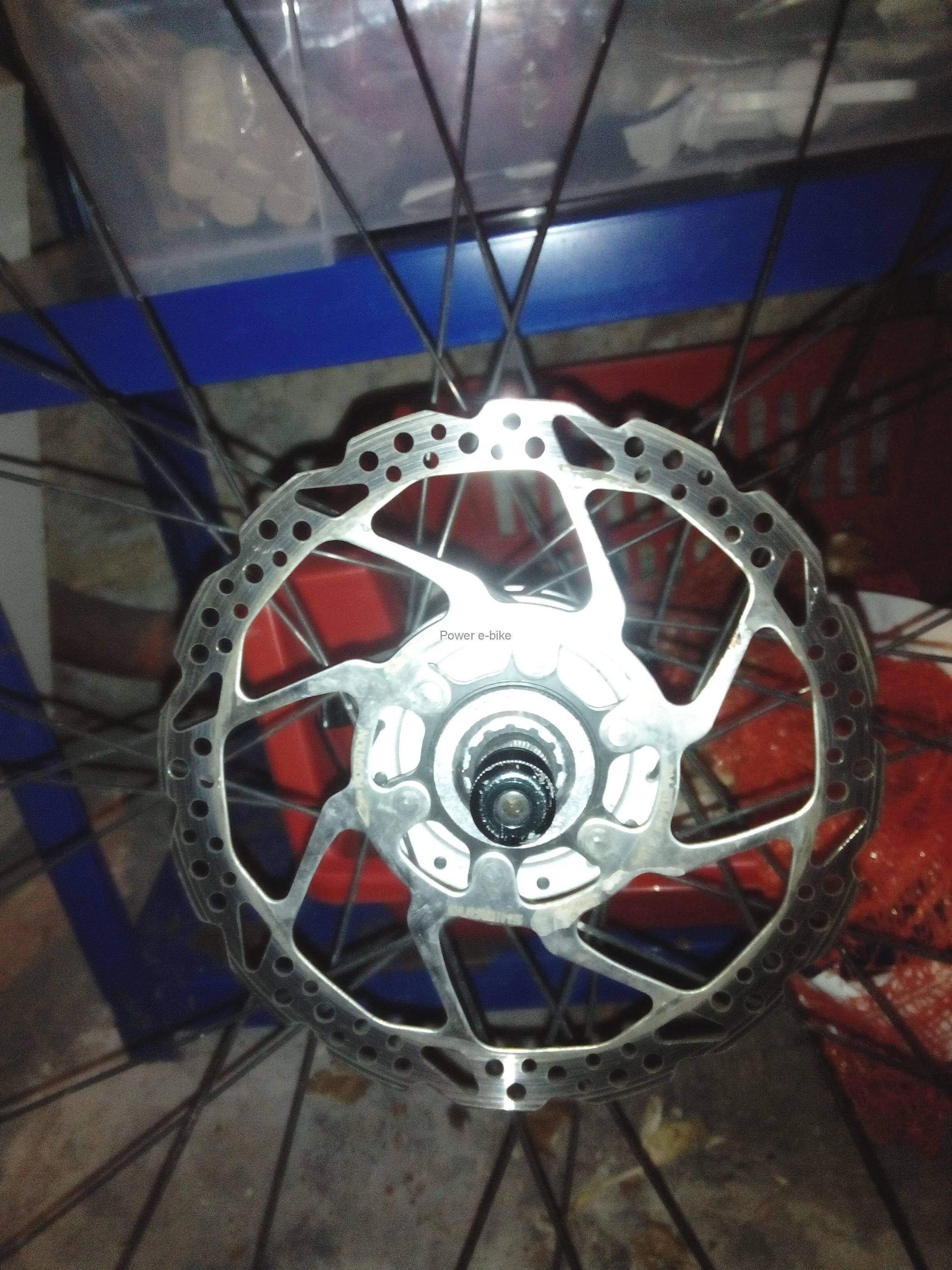
Figure 4: Disc brakes with a diameter of 180mm
For this motorised build, the author chose disc brakes for effective braking. Discs of 180mm were fitted at both front and rear. The safety of braking depends on the complete system and its suitability for the vehicle, not solely on disc diameter.
The mechanical braking system was selected for compatibility with motor cut-off and the electromagnetic braking described in the project. That system uses the motor to recover braking energy and feed it back to the battery. This function requires compatible motor, controller and battery components; it is not a feature of every kit.
Reinforcing the dropouts
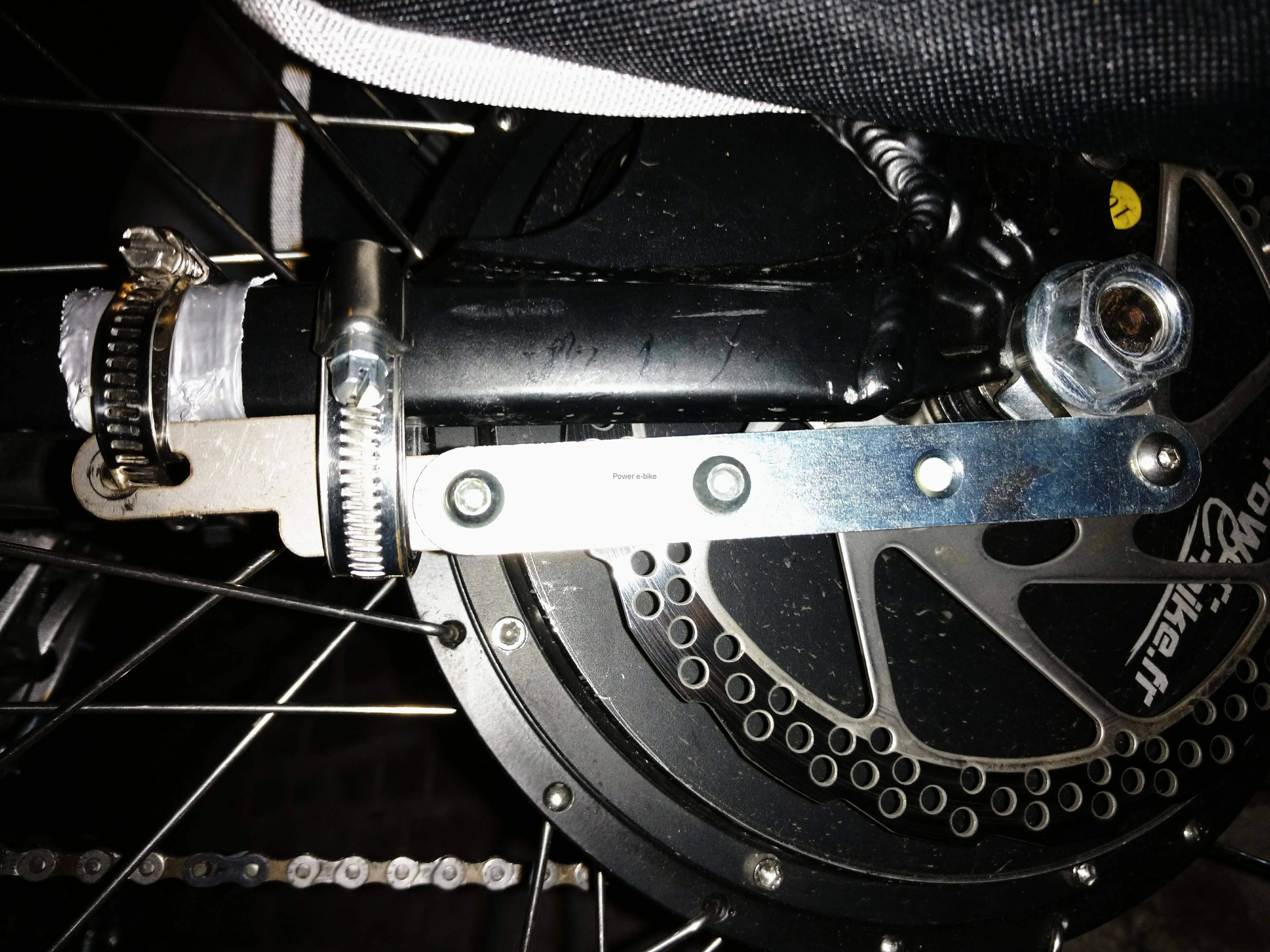
Figure 5: Torque arm used to reinforce the dropout
Conventional bicycle frames are not automatically suitable for high motor torque. Steel anti-rotation arms, called torque arms and also used on some motorcycles, were therefore considered for this build. Their compatibility, anchorage and axle fit must be checked for the actual frame and motor.
Building the electrical system
There are several suppliers of bicycle motor conversion kits. Power-Ebike.fr was described in the original article as offering powerful kits, up to 2000W and, with suitable battery and winding configurations, claimed speeds of 80km/h. The author reported good value and responsive after-sales help with assembly. These are historical descriptions of products and the author’s experience, not current availability, service or performance guarantees.
Several build configurations are possible, depending on the user’s expectations and physique.
Expectations: choosing the motor winding
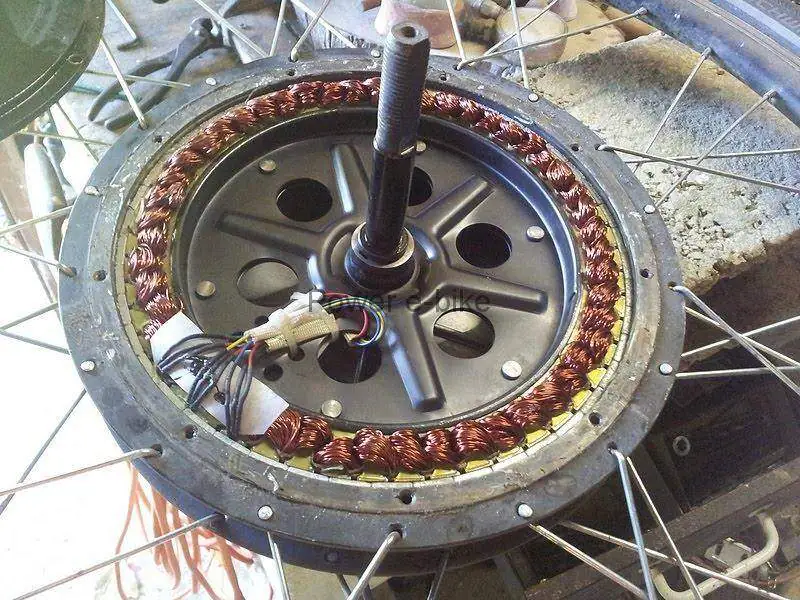
Figure 6: Motor winding
The original article distinguished several motor options:
- Fast motor with less torque (350/480), described for road-style riding
- High-torque motor with less speed (180×280, notation from the original text), described for mountain biking
- Balance between torque and speed (280x38O, notation from the original text to confirm), described as versatile
The winding influences the motor’s characteristics. The battery voltage, 36V, 48V or 60V in the article, also affects performance: under comparable conditions, higher voltage can increase rotational speed. Actual speed also depends on the controller, load and build; this is not a universal performance guarantee.
Rider weight: choosing the controller
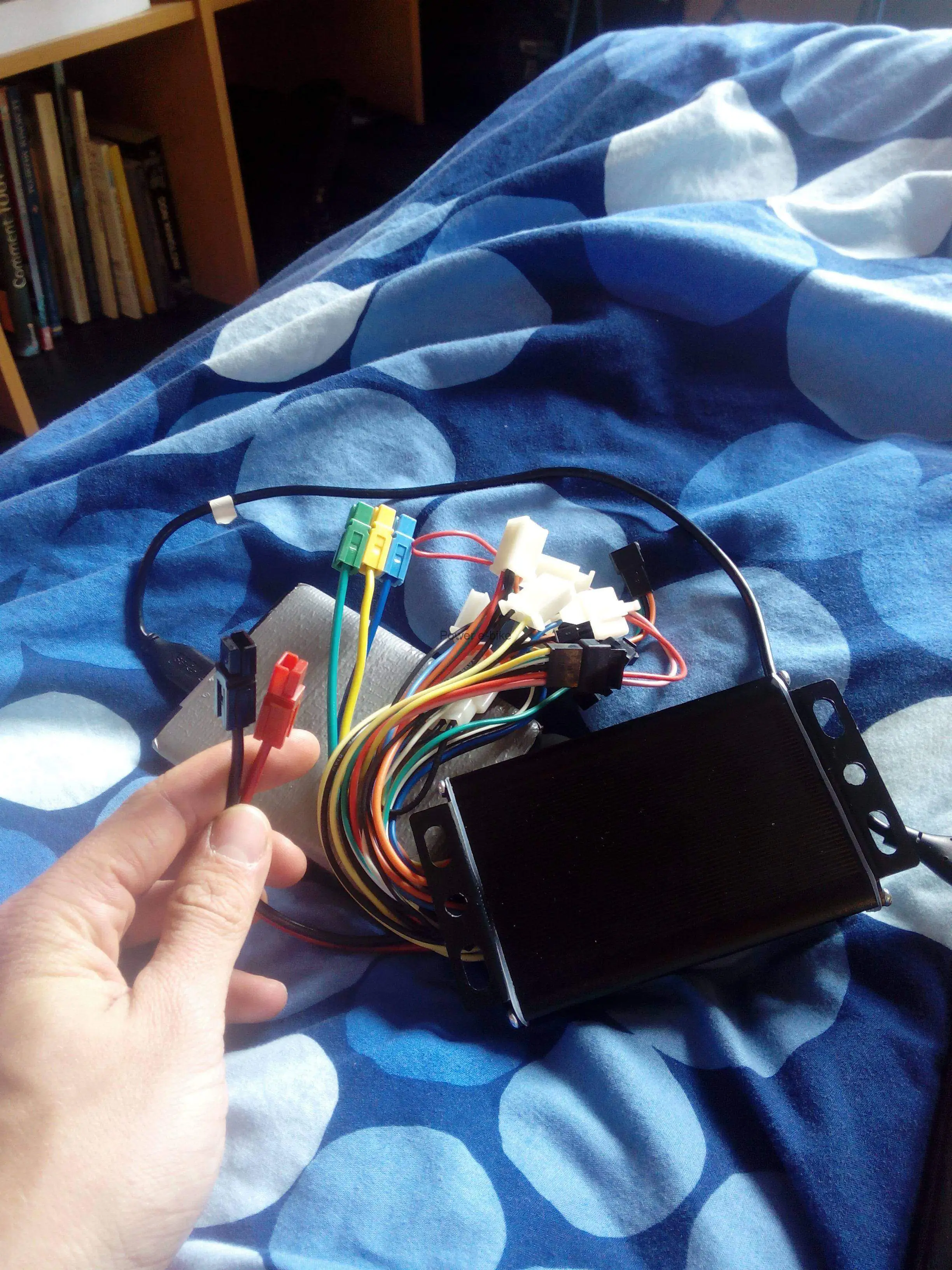
Figure 7: 17A controller
The rider’s and bicycle’s weight matter: a heavier load may require more motor torque. Current contributes to torque, but battery current and motor current must not be treated as interchangeable; the controller settings also matter. The original article listed Power E-Bike controllers of 17A, 22A, 28A and 35A. Confirm present availability and compatibility for your configuration.
WARNING: when choosing a battery, check that it can continuously supply the maximum battery current required by the controller.
The supplier can help identify the configuration best suited to your needs.
Installing the motor
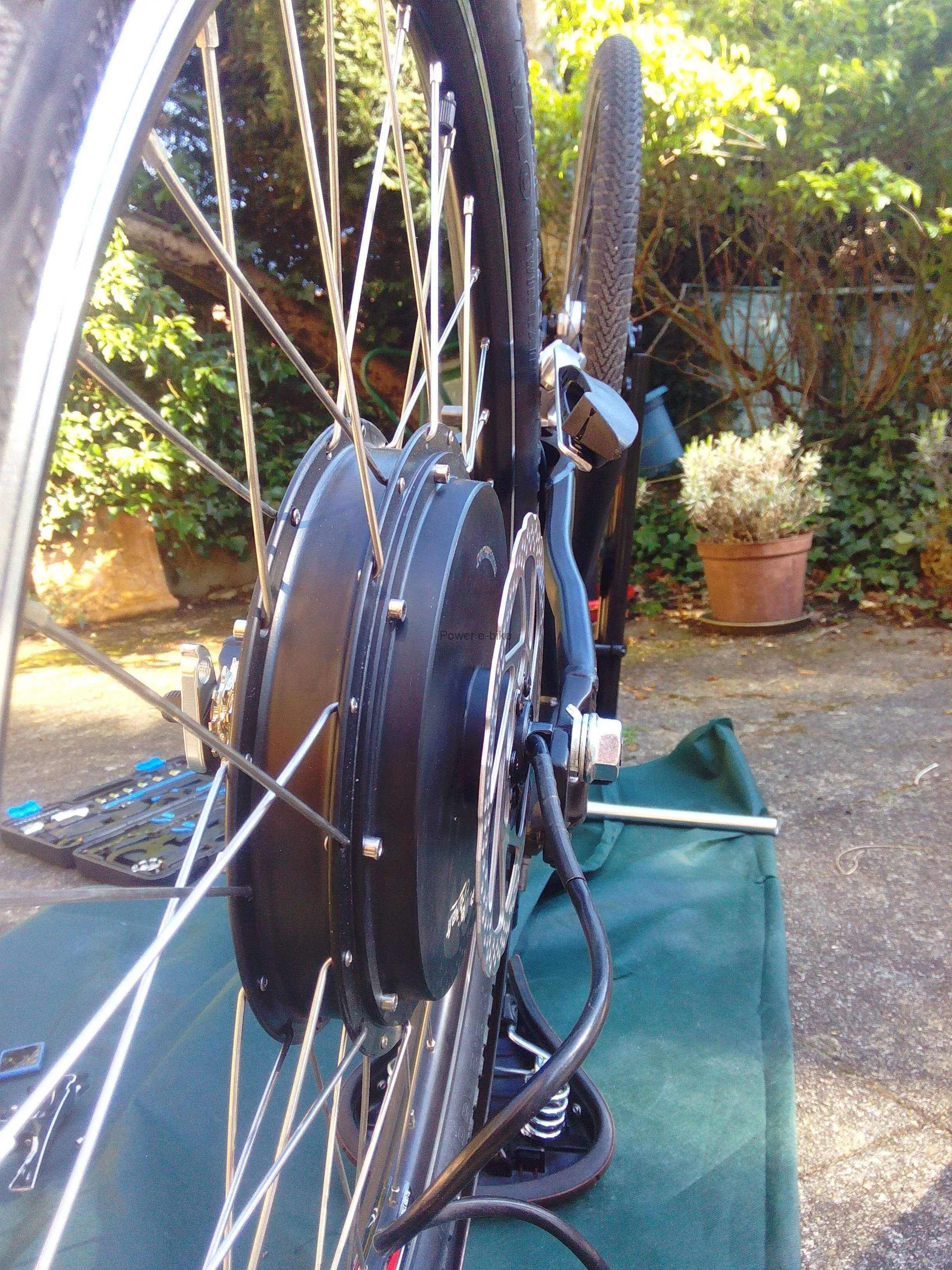
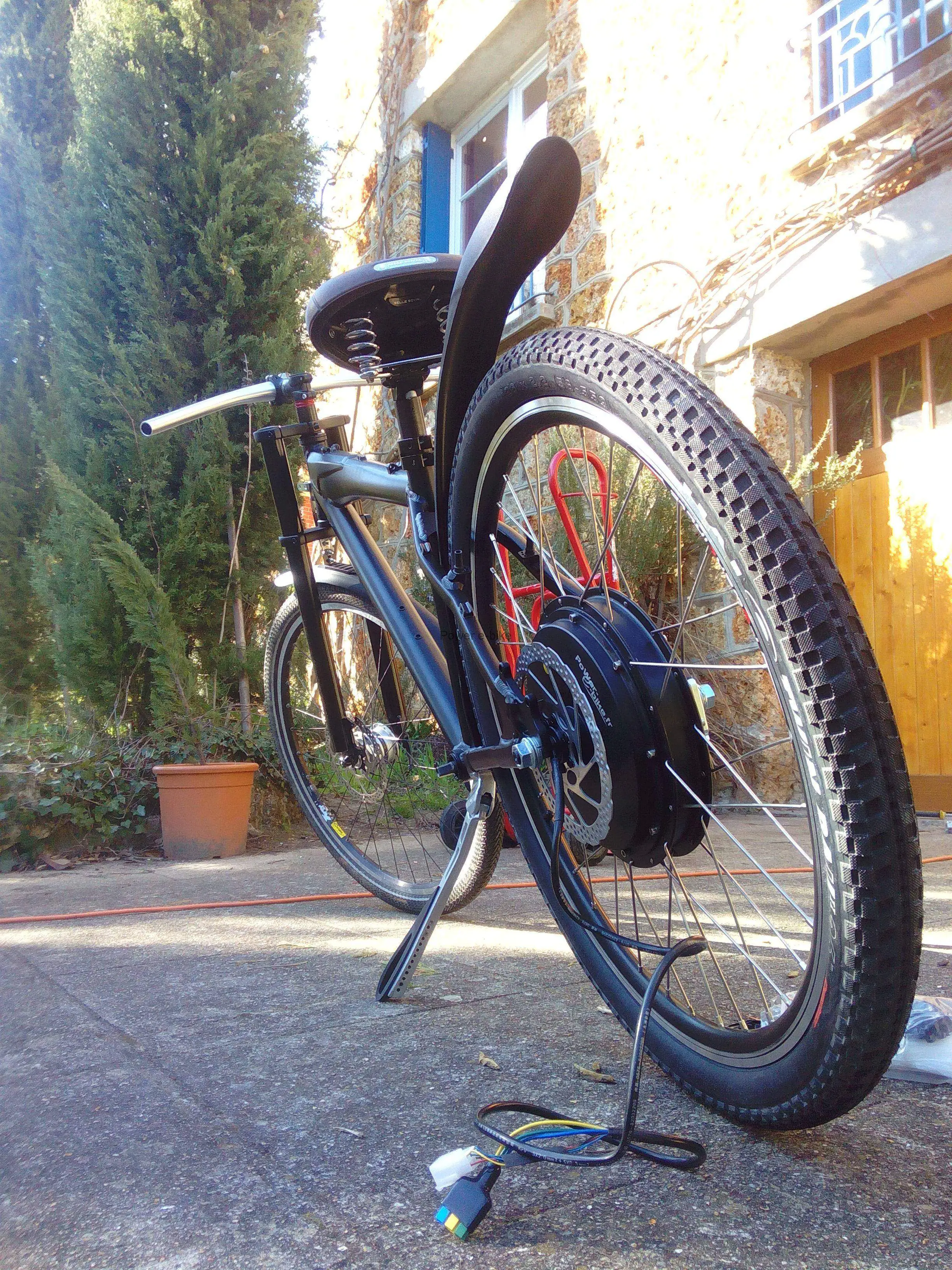
Figure 8: Motor installation
Kit compatibility must be checked against the actual frame, fork, axle and brakes. The original text mentioned lightly filing the dropouts to seat the axle. This must not be treated as a general instruction: have the fit checked by a competent mechanic and obtain the manufacturer’s approval before modifying structural parts.
Installing the controller
The controller brings the commands together and controls the battery and motor system. It needs suitable cooling to avoid overheating, so it should not be enclosed in an airtight box without a cooling solution approved for that model.
Wiring connections
The keyed connectors described in the build simplify connections, but matching shapes alone do not establish electrical compatibility. Check the wiring diagram, pin assignments and voltages. The original article referred to assembly photographs and explanations on the manufacturer’s website; obtain the documentation for the actual components.
Note:To protect the circuit against overcurrent, this build was fitted with a fuse. A fuse is not a substitute for a suitable battery, battery management system and correct wiring. A key switch was also installed to prevent unauthorised use of the electric bike.
Performance: some figures
Range and charging
With a battery of 12 A.h the author reported a range of 50kmapproximately, while assisting the motor by pedalling regularly. For this particular build, the article used an approximate range in km based on battery capacity in A.h multiplied by 4. This is not a universal conversion: voltage, usable energy and consumption also affect range. Without pedalling, in the article’s “motorcycle” mode, the reported range fell to 35km approximately. The build also included electromagnetic braking, using the motor as a generator to recover energy into the battery when braking, subject to the components’ compatibility.
Charging the battery of 12A.h was reported to take around 6h. This was an example for the charger used, not a standard charging time. Use the charger and instructions specified for the actual battery.
Note : Battery range depends strongly on conditions including wind, temperature, rider weight and build.
Speed and torque
As discussed above, battery voltage influences motor speed and current influences torque, with controller settings and limits also involved. Actual results depend on rider weight, load and wind direction. Battery current and motor phase current must not be assumed to be identical.
For the example using a battery of 48V and a controller of 17A, the article reported a maximum speed of 45km/h and climbing gradients of15% at a speed of 22km/h.
Consumption and comparison with a city car
Table 3: Consumption and comparison with a city car, VW Polo 5 — historical estimates
Advantages | Disadvantages |
Transport presented as environmentally friendly in the original comparison | – |
Agility and speed in town (1) | High exposure to bad weather |
Easy parking | Purchase price |
The chore of commuting by car, with traffic jams and drivers in a bad mood becomes wonderful rides! | – |
Low maintenance costs:
| – |
What to remember
Building your own electric bike gives it a much greater sentimental value than buying a finished one. It also helps you understand the machine and diagnose faults. Carry out repairs only within your skills and the manufacturer’s instructions; knowing the build does not mean every fault can safely be repaired at home.
Parts may seem expensive, even when some suppliers offer good value. Cost depends heavily on the equipment chosen: hydraulic or mechanical disc brakes, an aluminium frame, suspension and so on. The author put it as a choice between the latest iPhone and riding an electric bike.
An electric bike is not 100% environmentally impact-free. Battery manufacturing has a significant impact, and replacing car journeys can reduce some of the transport impact. The electricity used for charging also matters. The original article quoted around 76% nuclear energy in France and 20% coal in Germany; these are unsourced historical figures, not today’s electricity mix. They do not establish the complete life-cycle footprint.
The author’s next aim was to acquire solar panels and build a charging station, described as “100% clean” in the original. That wording expressed an aim, not a verified life-cycle assessment of the panels, battery or installation.
For the author, an electric bike was not a matter of laziness, but a way to seek an alternative to the car that could be cheaper, more enjoyable and less environmentally burdensome, depending on use and equipment.
If you have questions about building your electric bike, feel free to ask them in the comments.
E-Bike | VW-Polo |
Historical purchase price: 600-4000€ | Historical purchase price: 15 000€ |
Weight: 35 kg | Weight: 1100 kg |
Historical estimated costs: 0,002 €/km (maintenance + energy) | Historical estimated costs: 0,3 €/km (maintenance + petrol) |
Reported consumption: 12W.h/km | Reported consumption: 788W.h/km |
Direct emissions during use, reported CO2: 0 gCO2/km | Direct emissions during use, reported CO2: 110 gCO2/km |