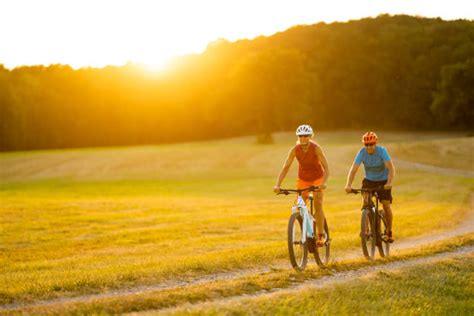
Summer e-bike rides can be a short outing, a regular journey or a way to explore on holiday. The plan still needs to suit the weather and everyone taking part. These six points cover departure and return: assistance does not remove fatigue, heat exposure or the limitations of the equipment.
Summer e-bike rides: choose a realistic purpose
Decide what the trip is for: reaching somewhere nearby, discovering a route or joining a family outing. Longer daylight does not require a longer distance. Check hills, surfaces and technical sections before choosing the bicycle and luggage.
Replacing some car journeys may add a reason to ride. An e-bike is not impact-free, though: the public Impact CO₂ tool includes manufacture and use in its calculation. The season alone cannot establish that every outing automatically lowers a footprint. Start with the transport your particular journey actually replaces.
Decide from the conditions, not only the departure time
Check weather forecasts and local alerts before leaving, including the conditions expected for the return. Consider storms, wind and exposed sections too. Have a shorter plan or the option to postpone rather than a programme everyone must finish at any cost.
French public health guidance advises avoiding exertion during very hot weather and drinking regularly. An earlier start or stronger assistance does not make a heatwave risk-free. Reconsider the plan if conditions deteriorate.
Treat the outing as something to organise rather than a challenge imposed by a holiday calendar. An appointment, reservation or distance already completed should not stop you choosing a different way home.
Plan water, shade and sun protection
Identify possible bottle-refill and shaded stopping places without assuming a listed water point will necessarily be accessible. Carry what suits the group and route. Keep useful belongings within reach instead of emptying a pannier beside a road.
French health insurance guidance recommends limiting sun exposure, covering up, suitable sunglasses and sunscreen as a supplement. Feeling cool does not remove UV exposure. Keep the helmet fitting properly too.
Before departure, check that clothing, glasses and luggage allow you to observe your surroundings and reach the controls. Choose stops where the bicycle can stand without blocking the route, with space for people and equipment.
Build a route with return options
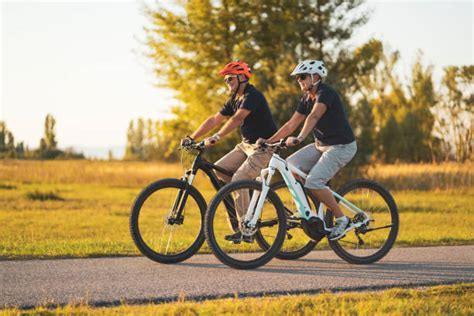
Choose shaded sections where available, but examine the actual path: a strip of shade does not make difficult terrain suitable for everyone. For greenways or holiday routes, check access information and any local restrictions.
In a group, plan around participants’ pace and abilities rather than the bicycle with the largest battery. Mark a shorter alternative and a point where you will decide whether to continue or return. If public transport is a possible way back, confirm bicycle carriage conditions before depending on it.
Check the bicycle and follow its battery instructions
Identify a shaded parking place and check the equipment requirements. Before riding, check tyres, brakes, drivetrain and luggage attachments using the equipment instructions. Dust and sand call for appropriate inspection and cleaning. Do not use the same tyre pressure or setup for every load and bicycle.
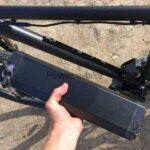
For stops, parking, storage and charging, use the instructions for your own battery and its compatible charger. Arrange a suitable location; an available socket does not establish that the place is suitable. Do not transfer charging temperatures or times from another system. The SHIMANO manual linked below relates to its particular equipment.
Pack selectively and prepare the return
Choose accessories from actual needs: a securely fitted picnic pannier, navigation mount compatible with your setup and suitable lighting if the return runs late. A more powerful lamp is not automatically better aimed. Check that luggage does not hide the lights.
Before setting off again after a stop, consider the group, the conditions and the remaining battery margin actually observed. Keep the phone available without handling it while riding. Afterwards, record any problem needing attention before the next outing. A successful plan suits the conditions encountered rather than a distance or range promised beforehand.
References and useful guides
- Santé publique France – Heatwaves
- Assurance Maladie – UV
- SHIMANO – UM-7GP0B
- ADEME / Impact CO₂ – E-bikes