
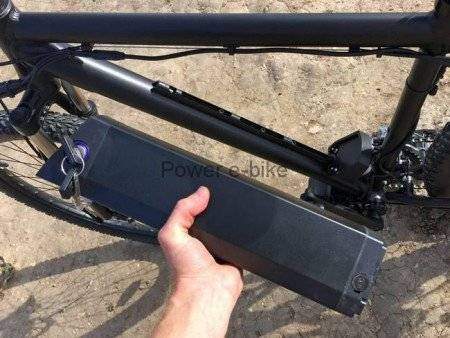
An e-bike battery in hot weather needs a plan for every stage of the day, from setting off to putting the bike away. Riding uphill, parking in sunlight and charging are different situations. This guide helps you organise them without prescribing a temperature, cooling time or lifespan that supposedly suits every battery.
E-bike battery in hot weather: begin with the manual
Identify the exact battery and charger models. Their manual may give different conditions for riding, charging and storage: a limit for one activity should not be transferred to another. The weather forecast also does not necessarily describe the temperature of a case standing in sunlight.
Bosch advises protecting its batteries from heat and direct sun; its numerical limits apply to its own systems. Follow the instructions for your equipment. The kit battery guide helps identify relevant components rather than assigning them universal heat resistance.
Plan the ride and protect the rider too
Before leaving, choose a route and return option that fit the forecast conditions. Familiar range is not a guaranteed reserve for a different ride. Do not assume that the system will automatically compensate for every exposure or prolonged demand.
Assistance does not protect the rider from heat. Santé publique France advises avoiding physical exertion during hot conditions. Postponing a ride may be preferable. Battery precautions do not replace health guidance appropriate to the individual.
Park without adding direct sunlight
At your destination, look for shade and consider how the sun will move during the stop. Avoid leaving the bike or its battery in an overheated vehicle. A pause in shade is not a temperature measurement or proof that the battery is ready for charging.
If the battery is removable, follow the specified removal and storage procedure. Do not force a mount or dismantle an integrated pack just to remove it. Check the locking mechanism and contacts before the next ride.
Allow natural cooling before charging
After riding or heat exposure, allow the battery to return naturally to its specified charging conditions. Do not use a refrigerator, freezer, ice or water to accelerate cooling. There is no fixed waiting time here after which every battery can be charged.
Check for visible damage and use the explicitly compatible charger in a location that meets its instructions. Keep required ventilation clear. A refusal to charge or an error light calls for checking the manual, rather than repeated connection attempts or a randomly selected replacement charger.
Choose a suitable storage location
Between rides, choose a dry location protected from direct sunlight and heat sources, following the manufacturer’s instructions. An enclosed room can also become hot. Calling a space a garage or cellar does not establish that its conditions are suitable.
For a longer break, follow the model’s charge-level and inspection instructions. Do not invent a monthly charging schedule or a percentage for every pack. Repeated heat exposure can contribute to ageing, but does not establish an identical annual capacity loss for different batteries.
Prepare the bicycle and battery for transport
Plan car journeys too. If the manufacturer specifies removing the battery before carrying the bike on a rack, follow that procedure. Protect the battery from movement, impacts and contact between its terminals and metal objects. Mechanical protection is not the same as packaging suitable for every journey.
Avoid leaving the equipment in a car parked in the sun. For trains, flights or shipping, check the carrier’s conditions in advance; a battery fitted to a bicycle is not automatically accepted for transport.
Recognise problems and stop experimental checks
A single drop in range cannot diagnose battery damage. Record any displayed message, the circumstances and previous storage conditions. Consult the relevant manual procedure instead of guessing what an indicator means.
After deformation, a significant impact or unusual behaviour, stop using and charging the battery and arrange assessment. Do not open the pack, replace cells or bypass its protections. If smoke or fire appears, move away, keep exposed people clear and alert the emergency services rather than handling the battery.
Build a simple routine and keep the documents
Before riding: visible condition, secure mounting and the correct instructions. Afterwards: protected parking, attention to messages and charging only under specified conditions. For longer absence: the storage location and model-specific guidance. This separates different situations instead of treating every issue with extra charging.
The battery maintenance guide adds seasonal storage and charging precautions. The original link to the SHIMANO UM-7GP0B manual is retained: use it only when its reference matches your equipment.