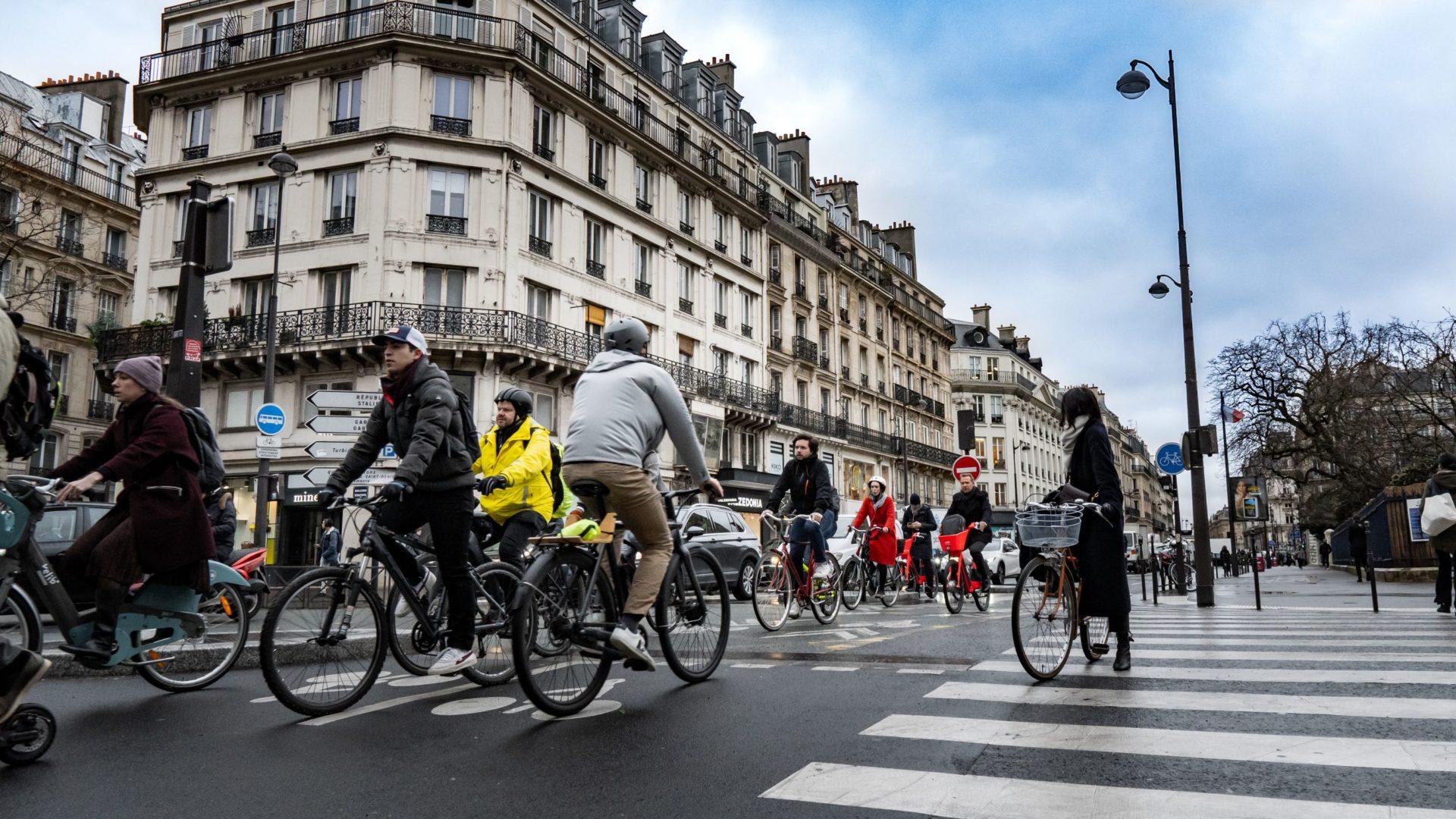
Sharing city roads means meeting at junctions, parked vehicles, delivery stops and pedestrian crossings. Better coexistence starts with recognising these situations, rather than blaming an entire group for an individual’s behaviour. The legal obligations cited here concern France. The preparation and caution advice does not replace the signs on the road or the rules of another country where you may ride or drive.
Sharing city roads: make movements readable
Before changing direction, check the space you intend to enter and the people who could be using it. When cycling, signal your intention when you can do so without losing control. When driving, an indicator gives information; it does not establish that the way is clear. Avoid an abrupt change of course simply because a vehicle is following.
Leave room to slow down or abandon a manoeuvre. Exchanging a glance may help communication, but it does not prove that the other person understands your intended path. Keep watching for children, people crossing and traffic hidden from view.
Overtaking: leave space and be prepared to wait
In France, article R414-4 requires at least 1 metre laterally when passing a cyclist in built-up areas, 1.5 metres outside them. Passing must remain safe.
Do not squeeze through an opening that is too narrow. A traffic island, an oncoming car or a queue stopping ahead can make passing unsuitable even when it looked possible a few seconds earlier. Waiting is no excuse to tailgate or intimidate a rider. When cycling, do not wave a vehicle past without knowing the situation visible to the driver behind you.
Junctions: read the signals before proceeding
The ONISR explains the French cycle-sign exception: proceeding at red only in indicated directions, while yielding. Without applicable permission, a red light requires stopping.
A cycle route that appears visually continuous does not remove the need to check signs, signals and intersecting movements. Before turning, look for a cyclist alongside you too. A cycle waiting area can improve visibility; do not try to reach one by squeezing beside a large vehicle. If the situation is unclear, waiting at a distance is preferable to forcing your way through.
Parked vehicles: anticipate doors and departures
In France, article R417-7 prohibits opening a vehicle door when that endangers another road user. Passengers are covered too.
Before opening, check the mirror and look directly into the neighbouring space, according to where you are sitting. When cycling, watch for occupied parked cars, reversing lights and vehicles pulling out. Prepare to slow down rather than make a reflex swerve. If an obstruction requires a change of course, check traffic and wait for a safe opportunity. Do not move towards a hazard merely to let someone pass sooner.
Buses and lorries: avoid lingering alongside
A large vehicle can hide a cyclist from view and sweep across substantial space when turning. Approaching a junction, avoid moving along its side or between it and the kerb. If it is already ahead, leave space while waiting for its manoeuvre, without crowding the rear or cutting across in front of its cab.
These are anticipation tips, not a guarantee of being seen. The driver must also check the relevant areas and adapt the manoeuvre. An unlit indicator or a temporary stop does not establish that the vehicle will stay still.
Cycle infrastructure: watch the transitions
An on-road lane, a separated track and a shared street have different access points. Notice where protection ends, where a car can turn and where people can cross. Whether riding or driving, approach uncertain transitions slowly enough to react. Surface markings alone do not remove the need to check the applicable priority.
For a regular journey, identify difficult exits, delivery activity and recurring lane changes. Our article about electric bikes in everyday journeys helps organise the route and its constraints, without presenting any journey as automatically safe.
Visibility and equipment: check before setting off
Service Public specifies the French lights: white or yellow front, steady red rear, at night or in insufficient visibility.
Aim lights without dazzling others and check that clothing or luggage does not cover them. Amber direction indicators permitted by the decree of 27 November 2024 are optional. They do not replace observation. Also check brakes, tyres and secure luggage. The electric motor kit selection guide explains assistance components; it is technical background, not evidence that a particular installation is compliant or safe.
Plan the journey and prevent escalation
Allow time for lights, slower sections and an arrival without rushing. If a particular section repeatedly causes difficulty, compare another route or departure time rather than relying on a risky manoeuvre to save a few minutes. Put distracting objects away before starting.
After a tense interaction, do not pursue the other person or attempt to block their path. Leave the conflict and find somewhere you can stop without obstructing traffic or exposing yourself to danger. A recurring infrastructure problem can be reported to its manager after stopping; the middle of traffic is not the place for an argument.