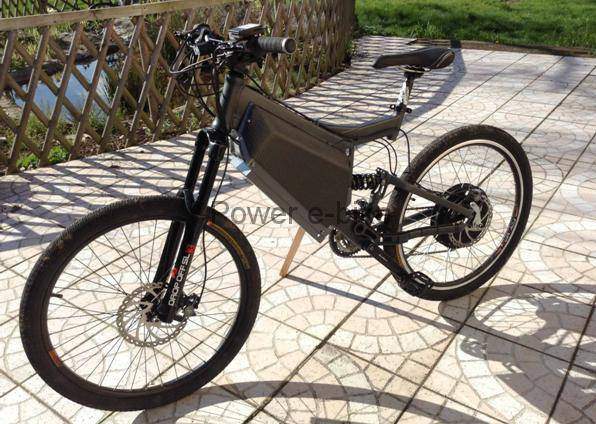
A few months ago, I decided to convert a mountain bike to electric propulsion.
After much thought and comparison of the available motors, the Nine Continent RH205 turned out to be the best fit for my project
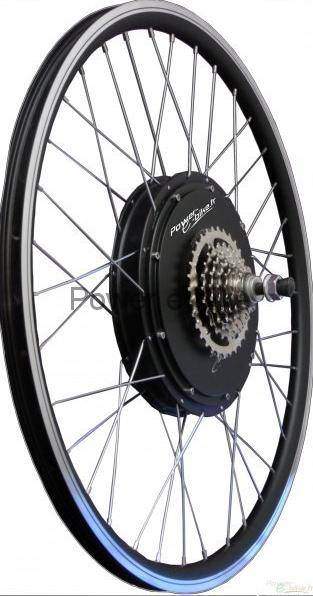 with a very attractive combination of quality, performance and price. I still had to choose the version.
I wanted an electric bike both for my hilly 14km commute and for riding forest trails. I therefore needed a useful range and a respectable top speed.
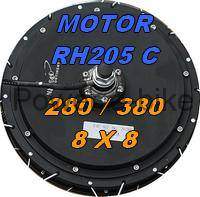
I chose the RH205S 280/380
 with a 28-amp Power E-bike controller
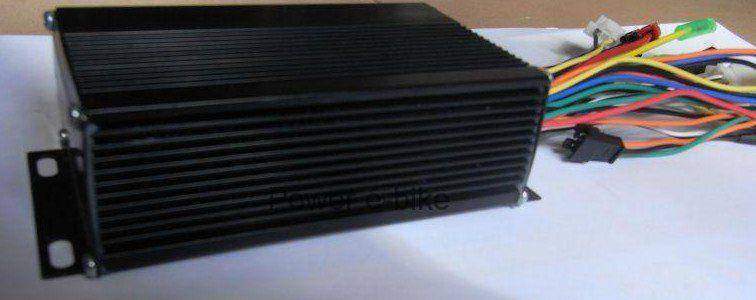
paired with a homemade battery of 20 LiFe cells, 10 Ah (60v), which I designed and assembled myself.
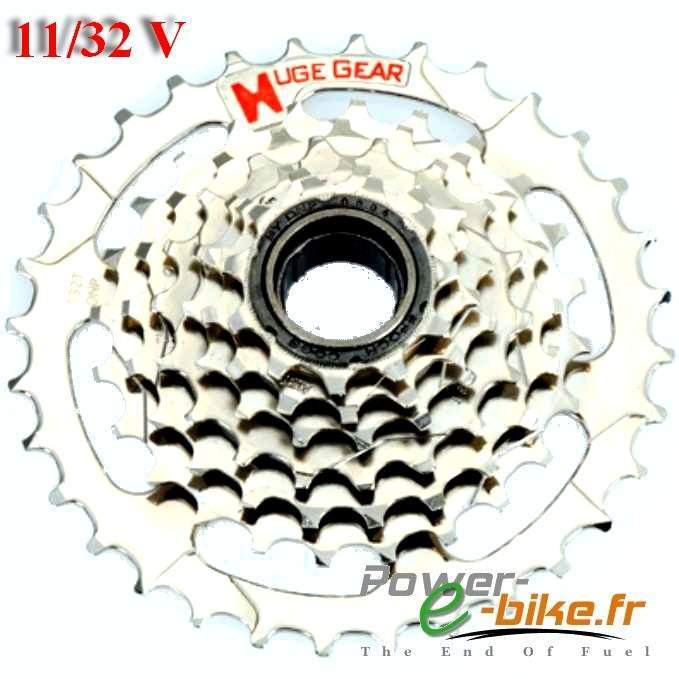
I also ordered a freewheel with an 11-tooth sprocket from Power E-bike so that I could pedal along with the motor at planned speeds above 40km/h.
I also intend to build and program an onboard computer using an Arduino microcontroller and a display to manage consumption and range, along with information such as speed and temperature. I will not describe that project in this article.
The order was placed with Power E-bike and delivered very quickly. I would also like to highlight the company’s professionalism.
The mountain-bike conversion could begin.
Vario Kaktus mountain bike: DH/FreeRide, long-travel Marzocchi fork, hydraulic brakes with 203mm discs.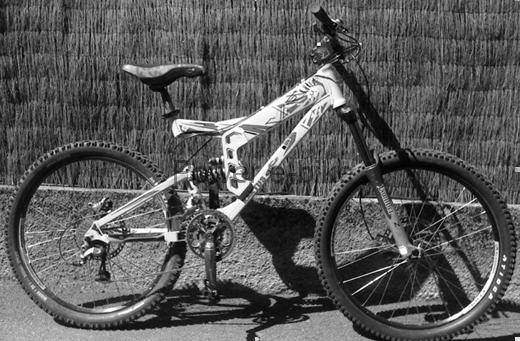
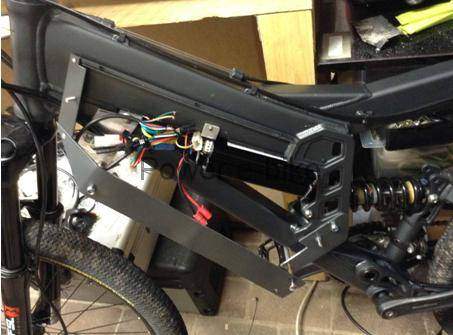
Preparing the frame: adding aluminium battery mounts and repainting.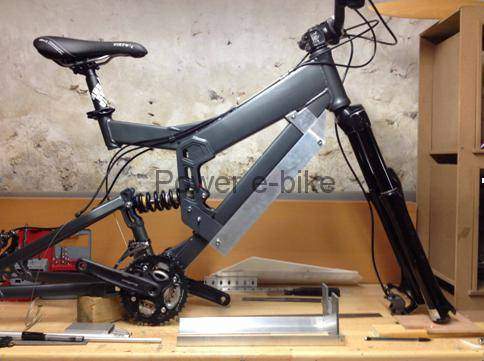
Installing the motor with homemade torque arms, necessary at this power level. The motor fits perfectly without spacing washers, and the brake disc naturally falls into place.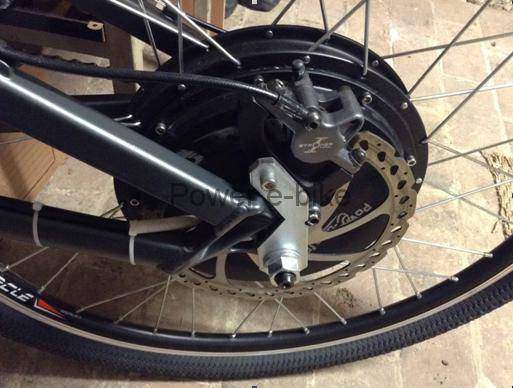
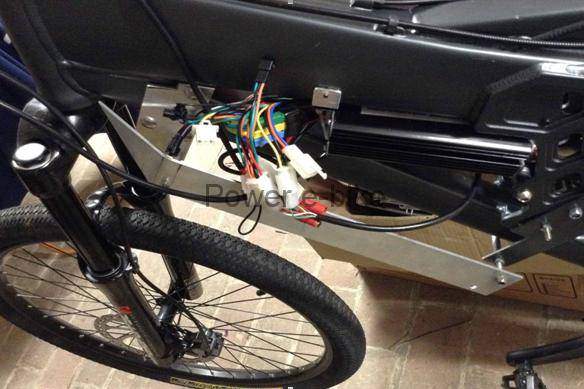
Fitting the motor controller inside the frame.
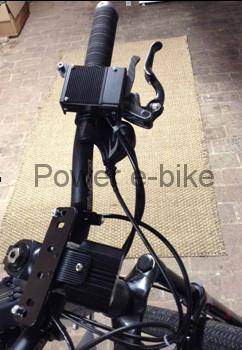
Making a left-thumb throttle trigger with an electric brake lever operated by a finger.
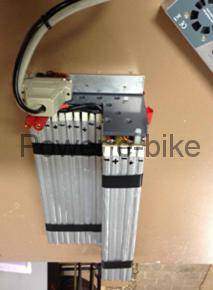
Assembling and soldering the battery cells.
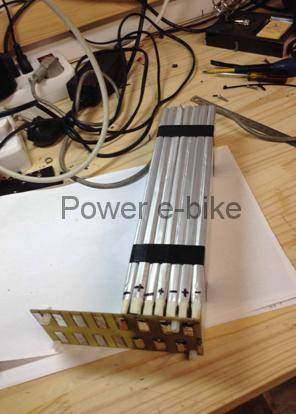
The battery has an unusual shape so that it fits into the available space around the frame. It has a charging/balancing connector and a power connector and sits in a removable aluminium case, allowing it to be taken out for charging and storage.
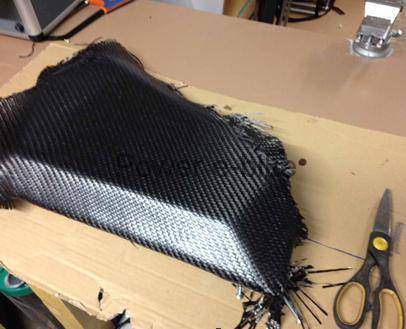
Of course, these components could not remain exposed around the frame, so I had to make side panels. I chose carbon fibre for its appearance and fitted aluminium supports to the frame to secure them.
The panel supports.
Shaping the carbon cloth over a polystyrene mould and laminating it with epoxy resin.
The bike, ready to ride…
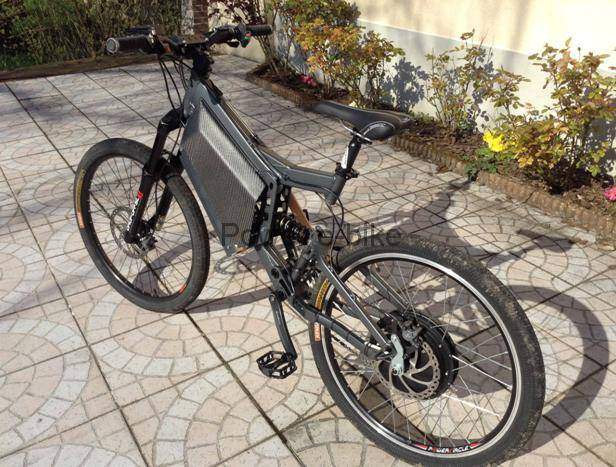
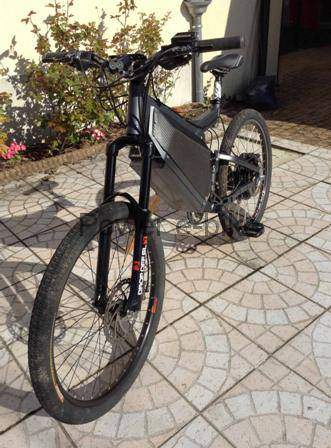
Testing could begin.
From the first few metres, the choice of motor proved sound.
The bike accelerates strongly, pedalling is almost unnecessary and it quickly reaches its top speed of 50 km/h. Even with the 11-tooth sprocket, I cannot keep up with the motor by pedalling at that speed: I can contribute up to 40 km/h with the 11-tooth sprocket and a 42-tooth chainring. Given the acceleration, changing gears is also unnecessary: largest chainring and smallest sprocket all the time.
Climbs are straightforward too; only very steep slopes really challenge the motor.
For range, I get about 30km with sporty riding and about 50km at 60 % power, keeping the average speed around 25, 30 km/h. That completely meets my needs.
I should also mention that I use road-oriented Kenda Kiniption tyres in 26×2.3, rather than off-road tyres.
To sum up, the Nine Continent RH205s 280/380 paired with the Power E-Bike 28A controller and powered at 60v is very capable and has left me entirely satisfied.
Be aware, however: a build like this is not approved for use on public roads…
I would also stress that a motor of this kind absolutely requires effective brakes—in my case, Hayes Stroker hydraulic brakes with 203mm discs—and a sturdy bicycle to avoid putting yourself in danger.
Thank you, Power E-Bike, for supplying this motor at such an attractive price!