
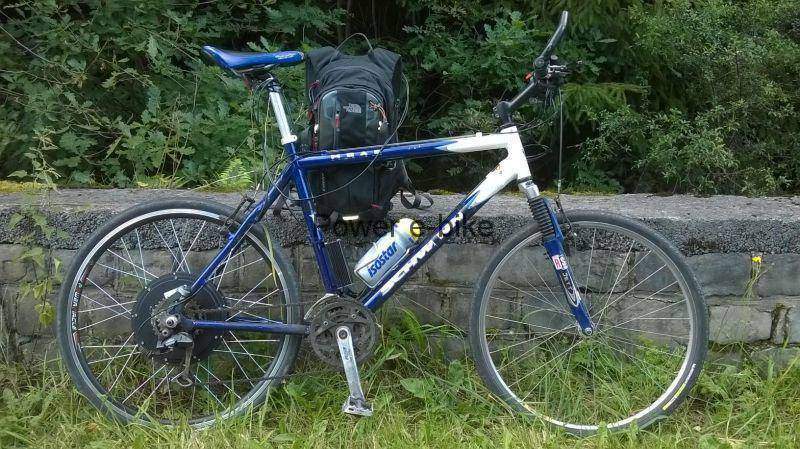
An electric-assist bike can make some everyday journeys easier to consider: commuting, climbing a hill or carrying your belongings. Its usefulness still depends on your route, storage and complete budget. These six points help you assess the advantages and limitations before choosing a bike or a conversion kit.
Start with the journey you actually make
Begin with your regular route rather than the power figure on a specification sheet. Record the return distance, hills, road surfaces and places where you stop. A pleasant Sunday ride can become less convenient when you carry a laptop, groceries or need to arrive at a fixed time.
An electric-assist bike is useful when it answers a specific need. If possible, try the route with a realistic load. Identify an alternative for days when riding is impractical, whether public transport, another bike or a different route. Replacing every journey is not a requirement for finding a worthwhile use.
Assistance accompanies your pedalling
On a pedal-assisted bicycle, the motor supports the rider’s effort. The experience depends on the selected assistance level, gearing and drive system. Check starting, smoothness and control at low speed. Assistance does not remove the need to brake effectively or handle the bicycle confidently.
Comfort also depends on riding position, saddle, grips and tyres. A larger battery cannot correct an unsuitable frame. During a test ride, check that you can put a foot down easily and reach the controls. This article makes no medical promises or numerical claims about extending life expectancy.
Check parking, access and lifting
A bicycle takes less space than a car, but it still needs usable parking at both ends of the route. Look for an attachment point, shelter where available and access wide enough for the bike. Panniers and baskets can make doorways or crowded storage rooms less convenient.
Lift the bike before deciding. Daily stairs, a vehicle rack or vertical storage may be more restrictive than riding distance. If the battery is removable, check how to handle and lock it. Include a suitable lock, a way to carry it and a location where you can secure the frame.
Plan range and electric-assist bike charging
Advertised range alone is not enough to organise daily travel. Keep a margin between your planned distance and the range you have actually observed with your equipment. Record battery level before and after several comparable rides, rather than relying on one particularly favourable trip.
Check where you can charge and whether the battery needs removing. Follow charger compatibility and manufacturer instructions. Similar-looking connectors do not establish that a different battery or voltage suits a controller. Our battery guide explains the parameters to examine before starting a conversion.
Compare complete costs rather than promised savings
Compare the bike or kit price with installation, tyres, brakes, drivetrain, a lock and maintenance. Allow for eventual battery replacement. In a conversion project, the condition of the original bicycle matters: a major repair can change the value of the whole project.
The calculation depends mainly on the journeys replaced. List additional cycling expenses separately from transport expenses you would genuinely avoid. Keeping a car means some fixed costs remain. This site promises neither the lowest price nor universal savings; historical product pages are retained as documentation.
Choose an arrangement you can keep using
The environmental case is especially relevant when cycling replaces car trips. The French public environmental portal notes that e-bikes still have manufacturing impacts, including the battery, while remaining less resource-intensive than cars. They are not impact-free, and a single petrol-equivalent figure cannot describe every use.
Before choosing, check your route, riding position, storage, charging and budget. For a kit, have compatibility of the frame, brakes and electrical components established. The useful choice is the one that remains practical after the excitement of the first ride, with maintenance and spare parts you can realistically arrange.
Useful guides and sources
- E-bike kit batteries: understand the main parameters
- Conversion kits: choice, installation and compatibility
- French public environmental portal: everyday transport (in French)
- Bosch eBike battery safety guidance