Everyday electric bike travel can fit a commute, shopping trip or connection with a train. Its usefulness depends on the route and what happens at both ends. Before assigning it an average speed or an annual saving, test the job it would actually do: arriving on time, carrying your belongings and having an appropriate battery arrangement for the journey home. It does not have to replace every other form of transport.
Where does everyday electric bike travel fit?
Choose one regular journey to examine first. Record how often you make it, your arrival deadline, what you carry and any constraints on the return. A direct trip to an office needs a different plan from a series of errands with several stops. The bike can cover selected journeys rather than becoming your only option.
On a pedal-assisted bicycle, the motor supports the rider’s pedalling. The outcome varies with the system, gradient, load and chosen assistance. The description “electric bike” alone cannot establish effort, range or whether a particular conversion suits the intended use.
Test the whole journey, not just its distance
Look for a usable cycling route rather than automatically following your usual driving route. Examine junctions, surfaces, unlit stretches and possible diversions. A slightly longer route may be easier and more comfortable to repeat.
On a trial without a tight appointment, measure door-to-door time: getting the bike out, preparing bags, riding, waiting at lights, locking the frame and walking to the destination. Test the return too. Compare car and public transport journeys with their parking search, walking and connections included. Use broadly comparable conditions, rather than comparing an unusually clear ride with a particularly delayed train journey.
Arrange the battery, equipment and parking
Check where the bike can be secured and how you reach the parking area. A narrow doorway, stairs or a missing fixed locking point may matter more than a few minutes of riding. Try moving the loaded bike through the actual access route before relying on it every day.
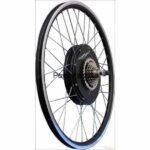
Follow the manufacturer’s charging and storage instructions. Observe battery use on your route and allow for the return without assuming a socket will be available at the destination. Check brakes, tyres and lights. The motor and equipment guide explains component choices; this installation experience describes one case, rather than establishing suitability for every conversion.
Separate assistance, effort and physical activity
The WHO includes cycling and transport in physical activity and recognises the health benefits of being active regularly.
An assisted journey does not require the same effort on every occasion. Assistance level, gearing, speed, wind and stops change the rider’s contribution. It is therefore inappropriate to assume every e-bike ride is more intense than walking or to attach a fixed number of extra years of life to it.
During your trial, record perceived effort, how easy it is to set off again and how you feel on arrival. These observations help organise a routine; they are neither a diagnosis nor a clinical measurement.
Compare costs on the same basis
Choose the same period and a realistic number of journeys for each option. For the bike, list purchase or rental, maintenance, necessary accessories, electricity, parking and potential replacement expenses. Equipment already owned and a new purchase call for different calculations.
- Identify transport spending you would actually avoid.
- Separate fixed costs that remain, such as a season ticket you still pay for, from variable expenses saved.
- Relate totals to the journeys you expect to replace in practice.
A car you retain still has costs: do not calculate as though it had disappeared. Without the relevant figures, personal financial savings cannot be established.
Keep an alternative for difficult days
Plan for occasions when the usual journey becomes impractical: strong wind, poor lighting, a breakdown, bulky luggage or a changed schedule. A fallback keeps a daily obligation from depending entirely on one piece of equipment.
The bike can also reach a station or complement a public transport line. Check parking arrangements and, if you intend to take the bicycle aboard, the operator’s conditions for that specific service. A journey that works at the weekend does not establish that the same connection will work at any hour. Consider the late journey home as well as the morning departure.
Decide after several representative trials
Keep a simple record for a few representative trips: total duration, parking convenience, battery indication before and after, perceived effort and difficulties. Add expenditure actually avoided, without treating a handful of favourable days as a certain annual result.
You can then choose which journeys to cycle, which to combine with another mode and which to leave aside. Survey averages cannot determine your own routine. A useful arrangement is repeatable: accessible equipment, an acceptable route and enough margin for disruption. That is a firmer basis for a decision than a universal promise about speed, health or savings.