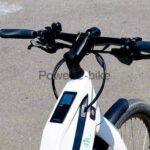

Electric bike myths also affect conversion projects. Adding a motor changes how a bicycle feels, but does not guarantee effortless journeys or the same result for every rider. This archive revisits the original article’s questions and corrects statements that were too broad.
Electric bike myths: does assistance remove the effort?
During normal pedal-assist operation, the motor supports the rider’s pedalling. Stopping the pedals stops that assistance; it does not instantly stop the bicycle. The bike can still roll with its momentum. The earlier text confused the end of motor support with the vehicle coming to a halt.
A useful trial compares assistance settings on a quiet, suitable route at a controlled pace. Notice how the bike starts, how smoothly support arrives and whether you can vary your effort comfortably. These observations are about operation, rather than a promised medical benefit or sporting result.
Is the assistance cut-off an absolute speed limit?
The speed at which motor support ends and the bicycle’s actual speed are different things. A rider can continue pedalling without assistance, or gather speed downhill. Applicable traffic limits and control of the bicycle still matter.
A comparison with a motorbike tells you little about a conversion’s legal category or suitability for a journey. A short demonstration or an enthusiastic account is not a substitute for documented system specifications. During a trial, assess the transition as assistance reduces rather than attempting to establish a maximum speed.
Is the extra weight always easy to manage?
A conversion adds a motor, battery, mountings and wiring. Their position affects handling, but does not make their weight disappear. A bicycle that feels pleasant on the road may be awkward on stairs, in a narrow storage area or when boarding a train.
Check the complete, ready-to-ride weight, including your lock and luggage. Try the actions your journey actually requires: pushing, parking, crossing a threshold and carrying where unavoidable. A removable battery may make some handling tasks easier, provided removal follows its instructions. Check the frame and mounting limits as well as the motor’s advertised weight.
Will the advertised range cover my route?
A quoted distance depends on the conditions in which it was obtained. Hills, wind, temperature, tyre pressure, carried load, battery condition and assistance setting can all affect the result. Routes of equal length do not necessarily require equal energy.
Record your normal route, climbs, stops and realistic charging opportunities. Then use observations from your own journeys instead of importing a promotional range figure. Pedalling does not automatically charge the battery. Energy recovery requires a system specifically designed for it; check the documentation for the actual motor, controller and battery combination. Where that feature is absent, use the compatible charger as instructed.
Does inexpensive travel mean free travel?
Running cost depends on what journeys are replaced and what is actually spent. Electricity is only one item. Tyres, drivetrain, brakes, servicing, a possible replacement battery and equipment also belong in the comparison. A historical catalogue price is not a current quotation.
Multiply electricity measured at the wall socket by your tariff, then add the expenses recorded over the same period. Compare journeys that deliver a similar service. Without consumption records and a realistic maintenance allowance, a claimed saving remains an assumption. Check whether parking, storage or alternative transport are still required on days when the bicycle is unavailable.
French categories are a specific reference
In France: maximum continuous rated power of 250 W, with assistance ending at 25 km/h and when pedalling stops. See the official French vehicle-category guidance.
Those French criteria do not automatically describe the law in another country. A peak-power label alone does not establish a vehicle’s category. The original blanket claims about insurance, registration and helmets should not be applied indiscriminately: establish the category and check the obligations for the place where the bicycle will be used.
A practical checklist for an urban journey
- Describe the real route, including hills, surfaces, stops, parking and access to your home.
- Check mechanical compatibility, secure mountings and system documentation.
- Assess starting, assistance cut-off and moving without support in suitable conditions.
- Plan charging, secure storage and a record of running expenses.
Use this list to separate what you have checked from what remains unknown. A difficulty with carrying or charging may matter more to your decision than a speed claim. The articles below offer a motor-selection guide and an installation account that includes its reservations.