
Commuting by e-bike: costs and support in France
04/11/2025
Fitting the Nine Continents RH205b Power E-bike motor on a Nakamura MTB
04/10/2026
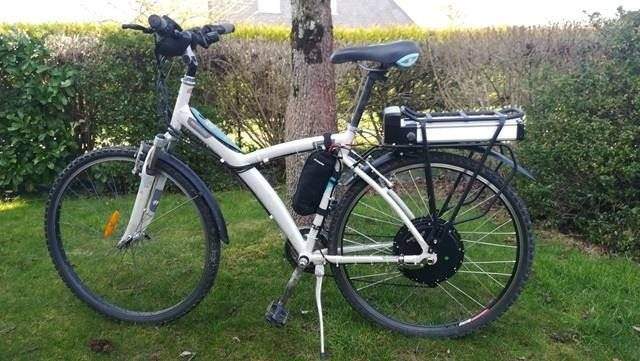
Electric bike project
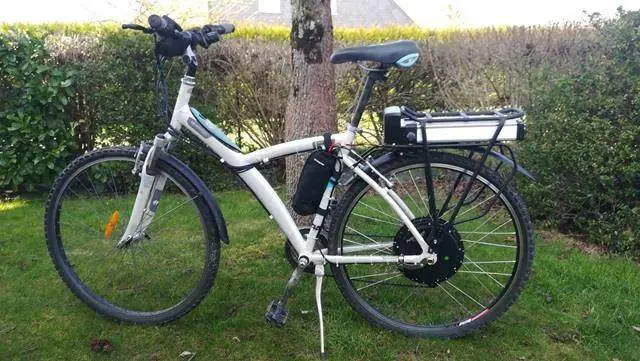
Requirements:
- 40 Km a day with a few gentle slopes
- Desired speed around 35 Km/h with some torque
- A battery on the luggage rack
Starting the project
There were many questions at the start: what type of motor and power, rear wheel or under the bottom bracket, what battery, and compatibility with my Decathlon hybrid bike…
The electric conversion kit
I began by looking at the different conversion kits on the market and chose the Power E-bike RH205c kit for:
- its value for money
- its compatibility with 36, 48 and 60v batteries
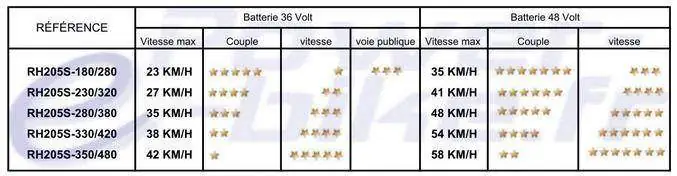
- its motor range, allowing a kit to be chosen according to speed and torque
https://www.power-e-bike.fr/fr/kit-de-conversion-velo-electrique/kit-moteur-arriere-nine- continent-rh205c-type-s-sans-batterie.html#/
For my use, I chose the intermediate RH205S 280/380 kit with a 48V battery:
The battery
Different mounting arrangements are available:
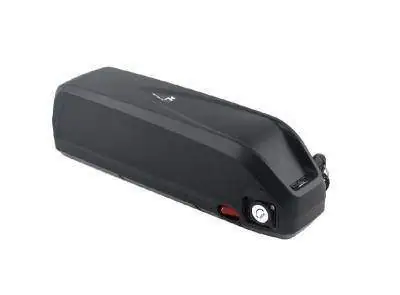
- on the frame: bottle or trapezoid

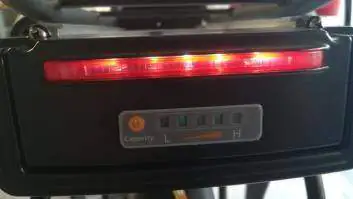
- a luggage rack with an integrated battery

- on the luggage rack, inside panniers
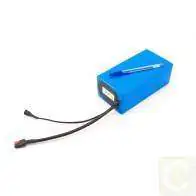
I chose the battery integrated into the luggage rack for these reasons:
- security: the battery is locked, unlike one inside panniers
- a frame-mounted battery did not fit my hybrid bike
Then there is the question of Lithium-Ion versus LifePO4 batteries
- Lithium-Ion benefit: lighter
- LifePO4 benefits: better performance in terms of voltage and many more charging cycles, 2000 versus 800 for Lithium batteries. Power E-bike’s tests use LifePO4 batteries from Ping Battery.
Unable to find a battery integrated into a luggage rack using LifePO4 technology, I chose a Lithium-ion battery from UNITPACKPOWER with its rack (https://www.aliexpress.com/snapshot/0.html?spm=a2g0s.9042647.0.0.p4Pcx7&orderId=89484013 105037&productId=32788740780).
When choosing a battery, several parameters matter:
- Continuous discharge, not maximum discharge
- Voltage. The higher the battery voltage, the higher the speed.
- Current. The higher the current, the greater the range.
The controller
The type of Power E-bike controller must also be considered. There are 3:
- 17A: 36V battery with 600W max (15A max), or 48v with 800 W max (15A max)
- For this controller, the battery’s continuous discharge must be greater than 17A
- To approach the speeds quoted on the Power E-bike website, choose a battery with the maximum current rating. For example, a 48v/15A battery would allow a speed of 48 Km/h (280/380), but with less torque than a 22 A controller, giving a greater range.
- 22A: 36V battery with 800W max (20A max), or 48v with 1000 W max (20A max), or 60v with 1350 W max (22A max)
- For this controller, the battery’s continuous discharge must be greater than 22A
- To approach the speeds quoted on the Power E-bike website, choose a battery with the maximum current rating. For example, a 48v/20A battery would allow a speed of 48 Km/h (280/380), with more torque than the 17A controller but a little less range.
- 35A: 36V battery with 1200W max (33A max), or 48v with 1650 W max (34A max), or 60v with 2000 W max (33A max)
- For this controller, the battery’s continuous discharge must be greater than 35A
- 17A: 36V battery with 600W max (15A max), or 48v with 800 W max (15A max)
Examples supplied by Power E-bike with a 48v 14,5 ah battery
- if your 48v 14,5 A battery has a continuous discharge capability of 20 A, it is compatible only with the 17tlcd model (17tlcd = 17 amperes)
- if your 48v 14,5 A battery has a continuous discharge capability of 30 A, it is compatible only with the 17tlcd + 22TLCD + 22HLCD models (17 amperes + 22 amperes)
- if your 48v 14,5 A battery has a continuous discharge capability of 40 A, it is compatible with all models
My battery experience
In my case, the 48v/15,6A battery does not let me reach 48Km/h for 2 reasons:
- Power below 1000W -> 48*15,6= 750W. I would have needed a 48V/20A battery.
- Lithium-ion batteries perform a little less well than LIFEPO4 batteries (10%). Unickpack is quite responsive, always replying within 24h. I also spoke to them by telephone.
Torque Arm
This part stiffens the rear of the frame, which is weakened by the weight of the rear wheel. https://www.power-e-bike.fr/fr/accueil/torque-arm-pour-moteur-rh205.html
Motor braking
My bicycle does not have disc brakes, so I chose brake levers with electrical cutoff. They are very effective at stopping the motor’s inertia.
Controller bag
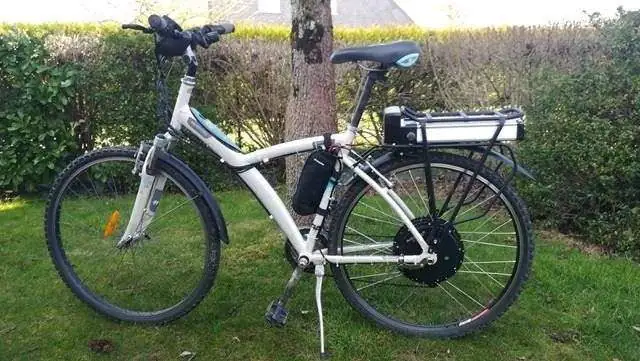
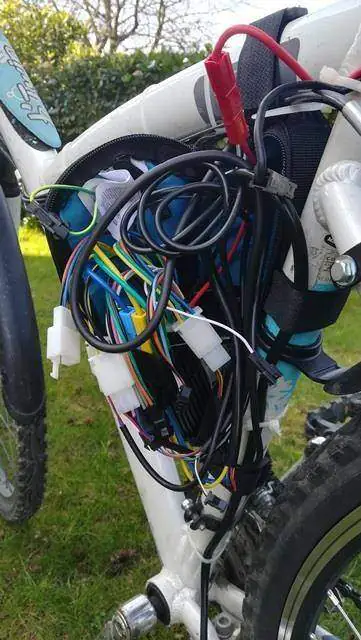
I found a bag at Decathlon for 10€, into which I fitted all the wires and the controller. It is tight, but it fits. I then used shoe waterproofing spray to reduce water ingress in the rain.
Assembly
Assembly is fairly straightforward; details are below. It took me 3 H to build the complete bike, in this order:
- Fitting the wheel
- Fitting the tyre and inner tube
- Very light grinding and filing of the bicycle to fit the wheel axle
- Fitting the wheel
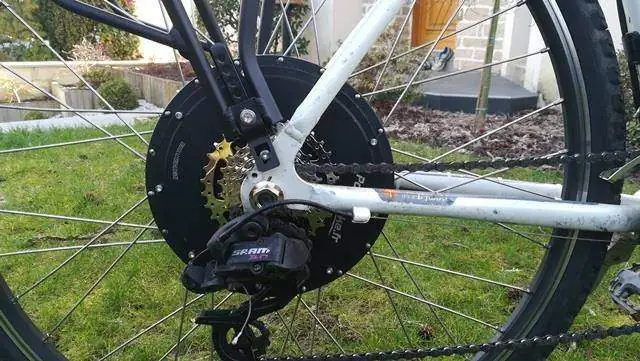

- Fitting the torque arms

- Tightening
- The first rotation showed that the wheel was out of true. Looking closer, some spokes were loose.
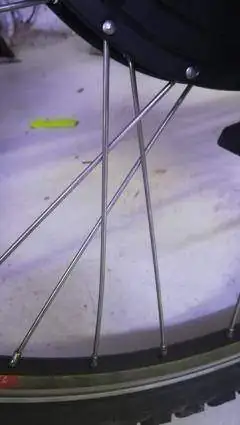
o
After speaking with Power E-bike, I bought a spoke key at Decathlon and trued the wheel. It was fairly simple, with plenty of tutorials on YouTube.
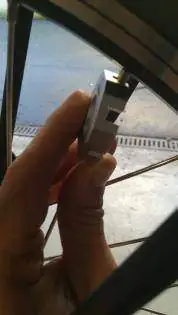
- As I did not have the proper equipment, I trued the wheel using a Bic pen 😉 supported against the luggage rack.

- Fitting the peripherals
- Throttle
- Brake
- LCD display
- LCD display settings
- Fitting the peripherals

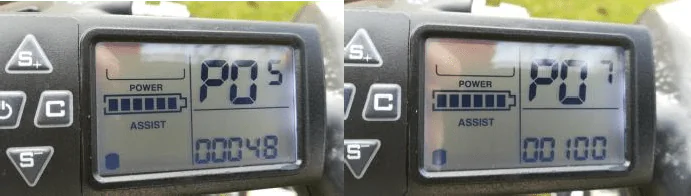
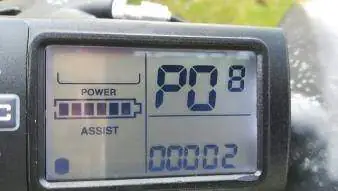
- Fitting the bag
- Connecting the cables: little chance of a mistake
Useful link
Performance simulation using the battery, motor type (Nine cont, then “select all motor”) and controller:
Motor reference notes:
- Rh205C 6×10 -180/280 rpm -> Nine Cont 2810
- Rh205C 7×9 -230/320 rpm -> Nine Cont 2809
- Rh205C 8×8 – 280/380 rpm -> Nine Cont 2808
- Rh205C 9×7 – 330/420 rpm -> Nine Cont 2807
- Rh205C 10×6 – 350/480 rpm -> Nine Cont 2806